A civil divorce decree may settle legal questions, but it does not by itself answer the spiritual question. Can Orthodox divorcees remarry? Sometimes, yes. But the Orthodox Church never treats remarriage as automatic, casual, or merely a matter of personal preference. Marriage is a holy mystery, a lifelong union in Christ. When that union has been torn apart, the Church meets the people involved with both truth and mercy. For someone carrying the grief, confusion, anger, or shame of divorce, this answer should not feel like a cold rule book. The Church does not deny the real wounds that can make a marriage collapse. She also refuses to say that vows no longer matter. Her pastoral work holds … [Read more...]
What an Orthodox Parish Is Meant to Form
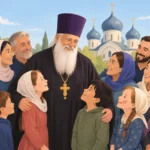
A parish is not a place one samples once a week for inspiration. It is a people gathered around Christ, His altar, His sacraments, and the apostolic faith He entrusted to the Church. An Orthodox parish exists to form whole human beings: men, women, and children who learn to repent, pray, love, endure, and live in communion with God. That may sound demanding because it is. The Christian life cannot be reduced to agreeing with ideas about Jesus, attending a religious event, or collecting spiritual content. Christ calls His people into a life of worship and obedience. The parish is where that life becomes concrete: where names are known, sins are confessed, children are baptized, the departed … [Read more...]
Orthodox Spirituality for a Life with Christ
A person can know a great deal about Christianity and still remain restless, distracted, and divided within. Orthodox spirituality begins precisely there: not with religious information alone, but with the healing and transfiguration of the whole person in communion with Jesus Christ. It is the life of the Holy Spirit in the Church, received through worship, prayer, repentance, sacramental life, and concrete obedience. This is not a spiritual technique for achieving inner calm. It is not self-improvement dressed in religious language. The Orthodox Christian life calls us to die and rise with Christ, to put away the passions that enslave us, and to become by grace what humanity was created … [Read more...]
Orthodox Baptism Sponsor Requirements Explained
A baptismal sponsor does not merely hold a candle, buy a cross, or stand for photographs. In the Orthodox Church, a sponsor receives a serious spiritual charge: to help the newly baptized person remain faithful to Christ and to the life of His Church. That is why baptism sponsor requirements concern more than family affection or social custom. They concern whether someone can truly confess the Orthodox faith and model it over time. For parents preparing to baptize a child, and for adults preparing to enter the Church, choosing a sponsor deserves prayer, honesty, and pastoral guidance. The right sponsor is not necessarily the closest relative, the most generous friend, or the person least … [Read more...]
How Orthodox Baptism Changes Life in Christ
A person does not come up from the baptismal waters merely having made a meaningful religious statement. In Orthodox Christianity, baptism is a real participation in the death and resurrection of Jesus Christ. That is how Orthodox baptism changes life: the old life, ruled by sin and death, is put away, and a new life in Christ begins. This is why the Church treats baptism with such joy and sobriety. It is not graduation from a class. It is not a public badge of private belief. It is the beginning of a new existence, received by grace and then lived through repentance, worship, prayer, confession, fasting, communion, and love of neighbor. Baptism joins us to Christ Himself St. Paul speaks … [Read more...]
Parish Transfer Orthodox Guide for a Faithful Move

An Orthodox parish transfer guide begins with a truth that can feel inconvenient: changing parishes is not merely changing where you attend on Sunday. In the Orthodox Church, a parish is a local spiritual home. It is where you stand before God in worship, receive pastoral care, confess your sins, raise your children, serve your neighbor, and learn to live the faith with real people over time. Sometimes a transfer is plainly necessary. You have moved across the country, your work schedule has changed, or the nearest parish is now an hour away. Other times, the decision carries grief, frustration, or uncertainty. Whatever has brought you to this point, make the move prayerfully, honestly, and … [Read more...]
What Is an Orthodox Sacramental Worldview?
A glass of water can be ordinary, necessary, and easily overlooked. Yet at Holy Baptism, water becomes the appointed means by which Christ grants new birth. Bread and wine remain bread and wine, yet in the Eucharist they become the true Body and Blood of the Lord. This is not religious imagination added to an otherwise secular world. An Orthodox sacramental worldview begins with the conviction that God made the material world good, entered it in the Incarnation, and uses it to bring His people into communion with Him. For many modern people, reality is divided in two: spiritual matters belong to private belief, while ordinary life belongs to work, politics, technology, consumption, and … [Read more...]
Orthodox Scripture Interpretation in the Church
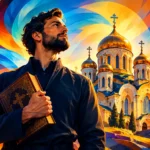
A Bible opened alone can become a mirror. We may find our assumptions, preferences, fears, and arguments reflected back at us. Orthodox scripture interpretation begins with a more demanding and more life-giving claim: Holy Scripture belongs to the Church that received it, proclaimed it, prayed it, defended it, and lives by it. This does not mean ordinary Christians should avoid reading the Bible for themselves. Quite the opposite. The Orthodox Church calls her people to hear, read, memorize, sing, and obey the Scriptures. But she does not ask anyone to become his own final authority. The Bible is the Word of God, and it is rightly heard within the worshiping people of God. Scripture Is the … [Read more...]
Why Young Adults’ Orthodox Interest Is Growing
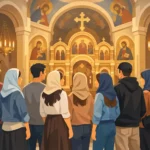
A young adult does not usually come to Orthodoxy because he wants a more interesting Sunday. Young adults' Orthodox interest often begins when the answers offered elsewhere no longer bear the weight of real life: suffering, moral confusion, loneliness, marriage, death, and the stubborn question of whether Christ truly founded a visible Church. Many have grown tired of being treated as consumers. They have heard inspirational messages, managed personal brands, absorbed contradictory opinions online, and watched institutions soften their convictions whenever pressure rises. Orthodoxy does not flatter this exhaustion. It calls a person to repentance, worship, prayer, fasting, confession, and … [Read more...]
How to Schedule Orthodox Confession at Your Parish
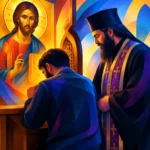
Confession is not a spiritual appointment to dread or a test you must pass. It is the sacrament of repentance: a real return to Christ, who receives the penitent through the ministry of His priest. If you are wondering how to schedule Orthodox confession, begin simply. Contact your parish, ask when the priest hears confessions, and come with humility, honesty, and a desire to be changed. For many people, especially those new to Orthodoxy, the practical question can feel awkward. Do you call? Do you wait after services? Is confession available every week? The answer differs from parish to parish, but the path is straightforward when you approach it as part of the Church’s life rather than as … [Read more...]
- « Previous Page
- 1
- 2
- 3
- 4
- …
- 15
- Next Page »