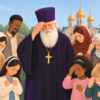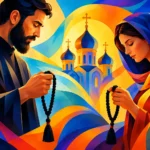
A prayer rope is not jewelry, a lucky object, or a way to measure spiritual achievement. It is a humble tool for gathering a wandering mind before God. Learning how to use a prayer rope begins not with counting knots perfectly, but with standing honestly before Christ and asking for mercy. In Orthodox Christianity, the prayer rope accompanies the Jesus Prayer: Lord Jesus Christ, Son of God, have mercy on me, a sinner. This short prayer carries the confession of the Gospel. Jesus is Lord. He is the Christ, the Son of God. We need His mercy. Repeated quietly and attentively, it can become a steady thread running through the day. What a prayer rope is for A traditional Orthodox prayer rope … [Read more...]
Orthodox Forgiveness Testimony Stories That Teach Us
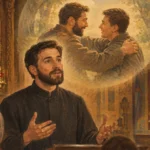
A real Christian testimony of forgiveness does not begin with a polished ending. It begins where the wound still has a name: betrayal in a marriage, a parent’s cruelty, a brother’s silence, a friend’s deception, a long-held resentment that has become part of the soul’s furniture. Orthodox forgiveness testimony stories matter because they speak honestly about this battlefield. They also refuse to leave us there. The Church does not treat forgiveness as a sentimental feeling or a religious way to avoid conflict. We forgive because Christ forgave us while we were still enemies of God. That truth is demanding. It reaches beyond the moment when someone finally says, “I feel better,” and calls us … [Read more...]
Orthodox Infant Baptism: What Parents Should Know
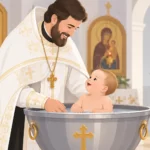
A newborn cannot explain the Creed, choose a patron saint, or profess faith with mature words. Yet an infant can truly receive the mercy of God. In Orthodox infant baptism, the Church does not wait for a child to become spiritually independent before welcoming him or her into Christ. She receives the child as a person made in God’s image, in need of healing, grace, and a life rooted in the Church. Parents need to know what to expect! For parents, this is not a sentimental family ceremony or a religious milestone arranged for photographs. Baptism is the beginning of a child’s sacramental life in Christ. It calls parents, godparents, and the whole parish to a serious and joyful task: helping … [Read more...]
Orthodox Fasting Versus Dieting: The Difference
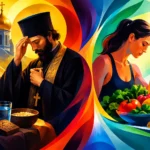
A grocery list can make Orthodox fasting versus dieting appear almost identical. Both may involve eating less, avoiding certain foods, planning meals, and resisting appetites. But the resemblance is only outward. A diet asks, “What will this do for my body?” Orthodox fasting asks a more searching question: “What is ruling my heart, and how can I offer my whole life to Christ?” The Church does not give us fasting as a religious version of meal planning. She gives it as an ascetic discipline: a concrete way of learning repentance, self-command, prayer, generosity, and dependence on God. Food matters because we are embodied persons. Yet fasting is never finally about food. Orthodox Fasting … [Read more...]
Why Orthodox Christians Cross Themselves
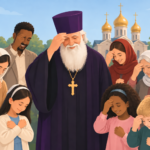
A visitor may notice it before the first hymn begins: Orthodox Christians quietly make the sign of the Cross as they enter the church, approach an icon, hear the Holy Trinity named, or begin to pray. Why Orthodox Christians cross themselves is not a question about religious choreography. It is a question about how Christians confess Christ with the whole person - mind, voice, heart, and body. The sign of the Cross is a brief but weighty prayer. It declares the central realities of the Christian faith: the Holy Trinity, the incarnation of the Son of God, Christ's saving death, and His victory over death. It does not replace faith, repentance, or a life of obedience. Rather, it gives those … [Read more...]
Catechumen Formation Success Stories That Last

A person can attend a few beautiful services, agree with Orthodox teaching, and still remain unprepared for the demands and joy of Christian life. The most encouraging catechumen formation success stories are not tales of quick religious excitement. They show something steadier: people learning to pray, repent, worship, receive correction, and belong to the Church with their whole lives. This is why the catechumenate must be more than a short course before baptism or chrismation. The Church receives people into a sacramental life that asks for faithfulness long after the first bright day of entry. A serious process gives inquirers time to hear the Gospel clearly, test their assumptions, ask … [Read more...]
A Church Visitor Guide for Orthodox Worship
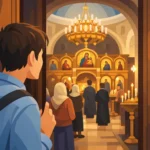
The first time you enter an Orthodox church, you may notice that almost everything asks you to slow down. The icons, candles, chanting, incense, and moments of silence are not religious decoration. They proclaim that worship is an encounter with the living God. This church visitor guide will help you arrive prepared, participate with peace, and recognize what you are seeing without pretending to know more than you do. You do not need to be Orthodox to visit. You do not need to have every question settled. Come honestly, come reverently, and give yourself permission to observe. The Church receives seekers as persons, not as projects. Before You Arrive Check the service time carefully and … [Read more...]
Orthodox vs Catholic Papacy and the Church
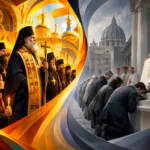
A question about the Orthodox vs Catholic papacy is never merely a question about church administration. It reaches into the Church's confession of Christ, the authority of bishops, the meaning of unity, and the way Christians receive the apostolic faith across generations. Roman Catholics and Orthodox Christians share far more than many people realize, but the papacy remains one of the clearest and most consequential divisions between us. For a seeker, this can feel technical at first. It is not. If Christ founded one Church, then the question of who may speak and act for the whole Church matters deeply. Orthodox Christians do not reject Rome because we oppose order, honor, or visible … [Read more...]
When Do Orthodox Children Commune in Church?
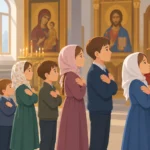
A baby is baptized, receives Holy Chrismation, and then is brought forward to receive the Body and Blood of Christ. For many visitors, this moment raises an immediate question: when do Orthodox children receive communion? The answer is simple, though its meaning is profound: Orthodox children commune from the time they are baptized and chrismated into the Church. This is not a sentimental custom or a shortcut around serious faith. It expresses what the Church believes about salvation, baptism, the Eucharist, and the place of children in the household of God. Children do not stand outside the life of grace until they can explain it. They are received into Christ's Church and nourished at His … [Read more...]
10 Best Orthodox Books for Inquirers Today

A first visit to an Orthodox service can leave a serious Christian with a dozen good questions before the final blessing: Why do we pray this way? What do icons mean? Where does this teaching come from? Why does the Church speak so often of salvation as healing and union with God? The best Orthodox books for inquirers do not merely answer isolated questions. They begin to show the coherent life of the Church - her worship, doctrine, prayer, Scripture, and sacramental life. Books are valuable servants, but they are not a replacement for standing in the services, asking questions of a priest, and getting to know an actual Orthodox parish. Orthodoxy is not a theory to master from a distance. … [Read more...]
- 1
- 2
- 3
- …
- 15
- Next Page »