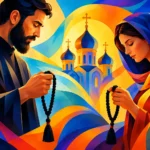
A prayer rope is not jewelry, a lucky object, or a way to measure spiritual achievement. It is a humble tool for gathering a wandering mind before God. Learning how to use a prayer rope begins not with counting knots perfectly, but with standing honestly before Christ and asking for mercy. In Orthodox Christianity, the prayer rope accompanies the Jesus Prayer: Lord Jesus Christ, Son of God, have mercy on me, a sinner. This short prayer carries the confession of the Gospel. Jesus is Lord. He is the Christ, the Son of God. We need His mercy. Repeated quietly and attentively, it can become a steady thread running through the day. What a prayer rope is for A traditional Orthodox prayer rope … [Read more...]
2026 AZ Liturgical Practicum: The Venerable Vigil – Valuable, Versatile, Vexatious
This coming Nov. 18-21, 2026 ASONA will host the 3rd Annual AZ Liturgical Practicum. The Venerable Vigil V A L U A B L E , V E R S A T I L E , V E X A T I O U S November 18-21, 2026 Location: All Saints of North America Church 18700 N. 107th Avenue Unit 5 Sun City, AZ $300 in person/$200 via livestream CLICK HERE TO REGISTER The schedule available shortly. Watch this space! Hotel Information Both hotels seem to have the best deal through Super.com SPEAKERS Fr. Patrick O’Grady | Fr. Christopher Horsley | Fr. Daniil Millwood Fr. Patrick O'Grady - A renown expert on Orthodox liturgics, Fr Patrick served as a Protestant pastor for 25 years and an Orthodox priest … [Read more...]
Orthodox Fasting Versus Dieting: The Difference
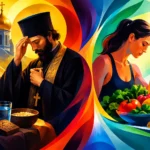
A grocery list can make Orthodox fasting versus dieting appear almost identical. Both may involve eating less, avoiding certain foods, planning meals, and resisting appetites. But the resemblance is only outward. A diet asks, “What will this do for my body?” Orthodox fasting asks a more searching question: “What is ruling my heart, and how can I offer my whole life to Christ?” The Church does not give us fasting as a religious version of meal planning. She gives it as an ascetic discipline: a concrete way of learning repentance, self-command, prayer, generosity, and dependence on God. Food matters because we are embodied persons. Yet fasting is never finally about food. Orthodox Fasting … [Read more...]
What Is an Orthodox Sacramental Worldview?
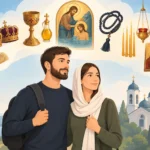
A glass of water can be ordinary, necessary, and easily overlooked. Yet at Holy Baptism, water becomes the appointed means by which Christ grants new birth. Bread and wine remain bread and wine, yet in the Eucharist they become the true Body and Blood of the Lord. This is not religious imagination added to an otherwise secular world. An Orthodox sacramental worldview begins with the conviction that God made the material world good, entered it in the Incarnation, and uses it to bring His people into communion with Him. For many modern people, reality is divided in two: spiritual matters belong to private belief, while ordinary life belongs to work, politics, technology, consumption, and … [Read more...]
Orthodox Scripture Interpretation in the Church
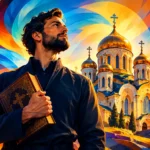
A Bible opened alone can become a mirror. We may find our assumptions, preferences, fears, and arguments reflected back at us. Orthodox scripture interpretation begins with a more demanding and more life-giving claim: Holy Scripture belongs to the Church that received it, proclaimed it, prayed it, defended it, and lives by it. This does not mean ordinary Christians should avoid reading the Bible for themselves. Quite the opposite. The Orthodox Church calls her people to hear, read, memorize, sing, and obey the Scriptures. But she does not ask anyone to become his own final authority. The Bible is the Word of God, and it is rightly heard within the worshiping people of God. Scripture Is the … [Read more...]
Why We Build Churches

by Fr. James Coles We do not build churches merely because we need more room. We build them because man needs a place where his heart can be gathered into the presence of God. A church is a place where heaven touches the earth, where we stand together before Christ, where our children learn to pray, where the departed are remembered, and where the Holy Mysteries sanctify our whole life. When a parish grows and we build, we are not simply constructing a larger building; we are preparing a larger dwelling place for prayer, for communion, and for the generations who will come after us. We build with gratitude for those who came before us, with love for those who stand beside us today, and with … [Read more...]
Liturgical Worship Versus Contemporary Services
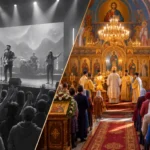
When Christians weigh liturgical worship versus contemporary services, they are often asking deeper questions: What is worship for? Who is the Church? How does a person actually grow in communion with God? These questions deserve more than a debate about hymn preferences, instruments, or clothing. A church service is never merely a matter of style. Orthodox Christianity answers from the life of the Church received from the apostles. Worship is not a weekly religious event designed around personal taste. It is the gathered people of God entering, by grace, the worship of heaven. The Divine Liturgy forms us because it places Christ at the center and asks us to bring our whole selves before … [Read more...]
St. Theodore’s Recruits 2026 Camping Trip
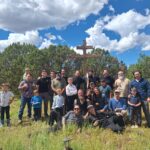
On September 14, the men's group of ASONA - St. Theodore's Recruits - held their 2026 Camping in the Pines adventure. Led by Deacon Joseph Peck, the camping event took place in Lakeside, AZ, on the land of one of the founders of St. Herman's Mission, Adam Hague, and not far from the St. Herman of Alaska Mission run by parish friend, Fr. Michael Vallecillo. Several members of St. Herman's parish also participated in the adventure. And an adventure it was. The campers all had the chance to see the grounds where St. Herman's mission originally celebrated Divine Liturgy "under the pines" (starting in 2018). It rained a bit every day in the White Mountains that week, but mostly it was a cool, … [Read more...]
Best Orthodox Bible Translations

A Bible can be easy to buy and hard to use well. A newcomer may find ten English editions, conflicting recommendations, and a shelf labeled “Apocrypha,” then wonder whether Orthodox Christians even read the same Scriptures as everyone else. The question of the best Orthodox Bible translations deserves a clear answer: choose a Bible that helps you receive the Scriptures as the Church has received, prayed, preached, and lived them. No single English volume settles every need. The best choice depends on whether you are beginning to read Scripture, preparing for catechism, following the services, or doing serious study. But the Orthodox Study Bible is usually the wisest place for an … [Read more...]
Why are there Icons?

Why Orthodox Christianity Requires Icons Orthodox Christianity does not regard icons as optional religious decoration. Their necessity arises from the Church’s confession of Jesus Christ: the eternal Word of God truly became flesh, entered history, possessed a visible human face, and remains forever the God-man. The defense of icons is therefore not fundamentally an argument about art. It is an argument about the Incarnation, the nature of Christian worship, the sanctification of matter, and the difference between objective revelation and the private constructions of the imagination. The Seventh Ecumenical Council at Nicaea in AD 787 defended the making and veneration of holy icons while … [Read more...]
- 1
- 2
- 3
- …
- 32
- Next Page »