A serious Orthodox Catechism class review should begin with a simple question: does this process form people for life in the Church, or does it merely provide information about the Church? The difference is decisive. Orthodoxy is not entered by agreeing with a set of religious ideas alone. It is received as a whole way of life: faith, worship, repentance, sacramental participation, moral obedience, prayer, and membership in a concrete parish.
For many inquirers, especially those coming from evangelical, Protestant, or Roman Catholic backgrounds, catechism is the first sustained encounter with the Church’s undivided mind. Some arrive with a strong knowledge of Scripture but little experience of Holy Tradition. Others have attended liturgical services for months and are drawn to the reverence, stability, and beauty of Orthodox worship, yet still need clear answers about doctrine and daily practice. A faithful catechetical process makes room for honest questions while refusing to reduce the ancient faith to personal preference.
What a Faithful Orthodox Catechism Class Should Do
A good class should give catechumens more than vocabulary. Certainly, they should learn what the Church means by terms such as Trinity, Incarnation, sacrament, icon, saint, repentance, and salvation. But the purpose is not to make people sound Orthodox. It is to teach them to confess the apostolic faith, recognize error, and live with Christ at the center of every part of life.
Instruction should be grounded in Holy Scripture and received through the Church’s worship, councils, Fathers, and saints. Scripture is not treated as a collection of isolated proof texts or private interpretations. It is read in the Church that preserved it, proclaimed it in worship, and has lived by it from the beginning.
Catechumens should also receive direct teaching on the Creed. The Creed is not a ceremonial statement repeated on Sunday without consequence. It is the Church’s confession of reality: who God is, who Jesus Christ is, what He has done for our salvation, what the Church is, and what Christians await in the resurrection of the dead and the life of the world to come.
A class that avoids difficult doctrines in order to remain comfortable is not serving seekers well. Questions about the Eucharist, baptism, confession, the Mother of God, the saints, marriage, fasting, sexual morality, and spiritual warfare deserve patient and truthful treatment. A person cannot make a meaningful confession of faith if the essential content of that faith has been hidden from him.
Catechism Is Not Only a Classroom Experience
The most helpful Orthodox Catechism class review will pay attention to what happens outside the lesson. Orthodox Catechism belongs within parish life. The catechumen learns not only by hearing an explanation of the Divine Liturgy, but by standing in the Divine Liturgy week after week, praying its prayers, hearing the Scriptures read, and allowing the rhythm of the Church’s calendar to reshape his imagination.
This is why a short course with a certificate at the end is often insufficient. Some people need more time because they are beginning with little Christian formation. Others need time to untangle habits and assumptions from a previous religious background. Still others are dealing with practical matters involving marriage, children, prior baptisms, or family opposition. The Church does not rush a soul toward baptism merely to produce a quick result.
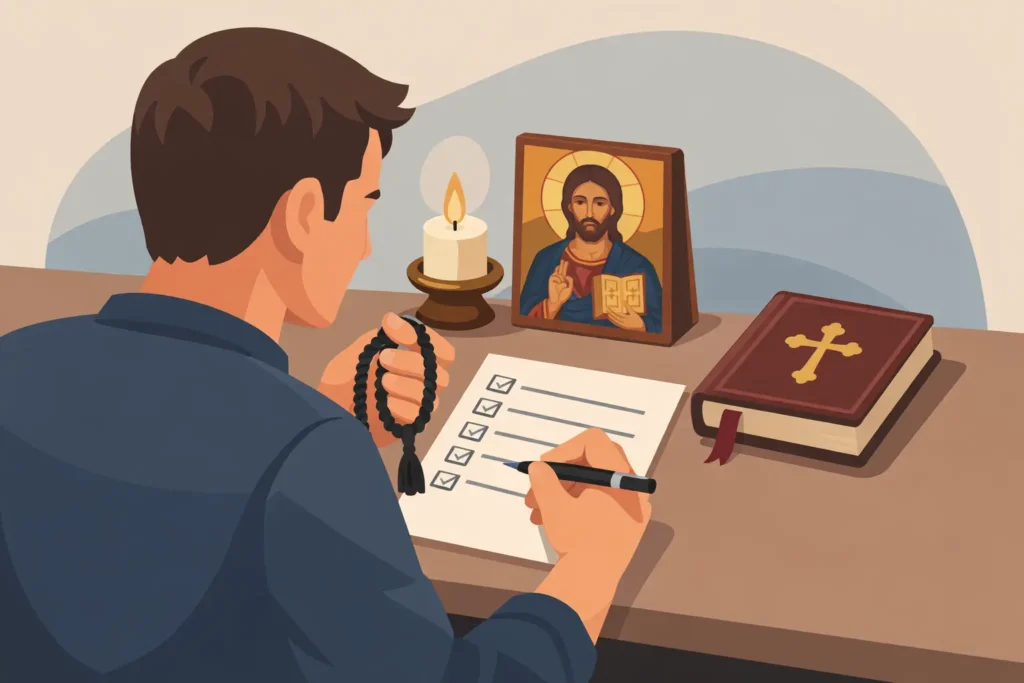
At the same time, Orthodox Catechism should not become vague or endless. A clear path is an act of pastoral care. Catechumens should know what is expected of them: regular attendance at services, faithful participation in instruction, growing familiarity with Orthodox prayer, an honest willingness to repent, and a commitment to live according to the moral teaching of Christ and His Church. The goal is not perfection before baptism. No one enters the Church because he has already conquered sin. The goal is a sincere conversion of heart and a readiness to begin the Christian life under the Church’s care.
Worship teaches what lectures alone cannot
Orthodox doctrine is inseparable from Orthodox worship. The hymns of the feasts proclaim the Incarnation. The prayers of Lent teach repentance. The services of Holy Week place the believer before the Cross and Resurrection. The Church’s worship does not simply illustrate theology after it has been learned. It teaches theology through participation.
For this reason, a class should encourage inquirers to attend services consistently rather than treating Sunday worship as optional background material. One may understand the words of a lesson and still remain unfamiliar with the Church’s actual life. Over time, the prayers become known, the fasts become understandable, and the saints cease to be distant names. The faith becomes a lived inheritance.
Clergy leadership and accountability matter
Online lectures, books, and podcasts can be valuable aids. They are not a substitute for being known by a priest and received by a parish. The Orthodox life is personal, sacramental, and accountable. A person preparing to become Orthodox needs the opportunity to ask questions that arise from his own circumstances and to receive guidance that is neither careless nor generic.
This is especially important when a seeker has strong convictions from a former tradition. Evangelicals may need careful help distinguishing Holy Tradition from human custom. Roman Catholics may have questions about papal claims, the filioque, and developments in doctrine. Those with no church background may need a more foundational introduction to Scripture, prayer, and Christian moral life. The truth does not change, but wise pastoral instruction recognizes where each person is beginning.
How to Evaluate an Orthodox Catechism Process
When considering a parish or class, do not ask only whether the teacher is engaging or whether the material is easy to follow. Those things can help, but they are not the standard. Ask whether the catechesis is recognizably Orthodox in content, worship-centered in practice, and connected to the actual life of the parish.
A healthy process will explain the Church’s doctrine clearly without presenting every teaching as a negotiable opinion. It will welcome questions without flattering skepticism. It will speak about salvation as union with Christ and healing from sin, not merely as a legal transaction or an emotional decision. It will teach the centrality of baptism, chrismation, the Eucharist, confession, fasting, almsgiving, and prayer.
It should also address the cost of discipleship. Entering the Church is joyful, but it is not casual. The Christian life requires forgiveness when one would rather hold a grievance, chastity where the culture praises self-indulgence, generosity where fear counsels possession, and humility where pride demands control. A catechism class that speaks only of beauty and belonging but not repentance offers an incomplete picture of the Orthodox faith.
There are legitimate differences in pace and format among parishes. A class may meet weekly in person, use supplemental online lessons, or combine both. The length of preparation in the Orthodox Catechism may depend on a person’s background and pastoral needs. These are matters of prudence. What should not vary is the seriousness of the Church’s teaching or the expectation that catechumens are preparing for a real sacramental commitment.
From Catechumen to a Life of Growth
Baptism or chrismation is not graduation from Orthodox education. It is the beginning of a deeper life of formation, often called mystagogy. After reception into the Church, new Orthodox Christians continue learning how to confess their sins, prepare for Communion, keep the fasts, pray at home, serve others, raise children in the faith, and remain steady when spiritual enthusiasm gives way to ordinary struggle.
This is one reason a parish with established teaching, pastoral oversight, and a genuine community matters so much. A new convert should not be left alone after being received. He needs worship, fellowship, instruction, correction, and the steady example of Orthodox Christians who have remained faithful through trials, marriages, illnesses, work pressures, and family responsibilities.
At All Saints of North America Orthodox Church, Orthodox Catechism is understood as preparation to belong fully to Christ and His Church, not as a religious product to consume. For seekers in Surprise, Peoria, Sun City, Glendale, Buckeye, and the surrounding western Phoenix communities, a serious pathway into Orthodoxy provides something increasingly rare: clear teaching, reverent worship, and a parish home where the faith is meant to be lived.
If you are considering Orthodox Christianity, do not wait until every question feels settled before taking the next faithful step. Attend the services, listen carefully, ask honestly, and allow the Church’s prayer and teaching to test your assumptions. The path into the Church is not built on pressure or passing emotion. It is built on the enduring call of Christ: repent, believe, and follow Him.