A parish is not sustained by a few generous people while everyone else receives religious services. Parish stewardship is the grateful offering of our whole life to Christ through His Church: our prayer, repentance, presence, labor, abilities, and material resources. It is not a fundraising strategy borrowed from the business world. It is a Christian response to the God who has given us everything.
For many Americans, giving to a church can feel private, awkward, or optional. Yet the Orthodox Christian life has never been private. We are baptized into a body. We stand together at the Divine Liturgy, bear one another’s burdens, feed the poor, teach our children, maintain a place of worship, and hand on the faith we received. Stewardship gives visible form to that shared life.
Parish Stewardship Begins With Belonging
The word steward describes someone entrusted with another’s household. Nothing we possess is finally self-made or self-owned. Our breath, time, family, work, strength, skills, and income are gifts received under God’s mercy. The question is not whether we have something to offer. The question is whether we will offer what we have with thanksgiving.
This changes the spirit of giving. A Christian does not support the parish as a customer paying for access to sacraments, classes, or pastoral care. Baptism, confession, Holy Communion, and the prayers of the Church are not products. Nor does a parish assess a person’s worth by the size of his donation. The widow’s two small coins remain a rebuke to every worldly measure of generosity.
At the same time, belonging carries responsibility. If a parish is truly our spiritual home, its needs should concern us. The lights must remain on. The clergy must be supported. Children need formation. Inquirers need careful teaching. The sick, grieving, and struggling need real care. A parish cannot carry out these works through good intentions alone.
The Offering of Time, Talent, and Treasure
Stewardship is often summarized as time, talent, and treasure. The phrase can become familiar enough to lose its force, but it names three real areas of discipleship.
Time means more than attending when it is convenient. Faithful participation in Sunday worship and feast days forms the center of parish life. It also means making room for catechism, Bible study, fellowship, service, and prayer. Families especially must guard the Church’s rhythm against the pressure of endless activities. Children learn what matters not only from what parents say, but from what parents make time for.
Talent means offering the abilities God has given. One person can sing. Another can prepare meals, welcome visitors, teach children, repair equipment, organize a workday, make a phone call, or quietly notice someone who is alone. Not every need requires public visibility. Some of the most necessary service in a parish happens before anyone arrives or after everyone has gone home.
Treasure means financial giving. It is wise to speak plainly about this because money touches our fears, desires, and loyalties. Regular, planned giving helps a parish lead responsibly rather than merely react to emergencies. It also trains the giver in freedom. When we give first to God, rather than only from whatever remains, we confess that our security does not rest in accumulation.
The amount will differ from household to household. A family under serious financial strain should not be crushed by guilt. A student, retiree, single parent, or family facing medical costs may need to give modestly for a season. The Church calls for honesty and sacrifice, not performance. Those who have received more, however, should not use another person’s hardship as an excuse for withholding what they can readily offer.
Why Regular Giving Matters
Occasional gifts can meet an immediate need, and they should be received with gratitude. But a parish needs the stability of regular stewardship. Predictable giving allows faithful planning for worship, education, mercy, facilities, and the long work of forming disciples.
This matters especially in a serious Orthodox parish. Catechumens need more than a brief introduction before baptism or chrismation. They need patient instruction. Those newly received into the Church need mystagogy, the deep post-baptism formation that teaches them how to live what they have confessed. Children and young adults need more than religious entertainment. They need the Scriptures, the saints, prayer, moral clarity, and the confidence that Orthodoxy is true.
Such work requires the committed life of a people. A parish with clear teaching, reverent worship, and pastoral availability does not appear by accident. It is built through years of prayerful sacrifice.
Stewardship Must Be Joined to Repentance
A large gift cannot replace a life that refuses repentance. Nor can volunteer hours excuse bitterness, gossip, neglect of prayer, or contempt for others. Christian stewardship is not a transaction by which we purchase peace with God. It is one expression of a heart being healed.
For this reason, begin with prayer. Ask God to reveal where fear governs your decisions. Examine whether spending patterns reflect the Kingdom or simply the habits of the surrounding culture. Speak honestly with your spouse if you are married. Make a plan that is realistic, consistent, and generous enough to cost something.
Then keep the plan quietly. There is no need to advertise sacrifice. The Lord sees what is offered in secret, including the hidden acts that no parish report will ever record.
A Parish Is a Place of Mutual Service
Healthy stewardship also resists the temptation to make a parish into an institution that exists only to meet personal preferences. We may have opinions about schedules, music, programs, buildings, or communication. Some concerns may be valid and worth raising respectfully. But the first question for a Christian is not, “What am I getting?” It is, “How can I serve Christ and His people here?”
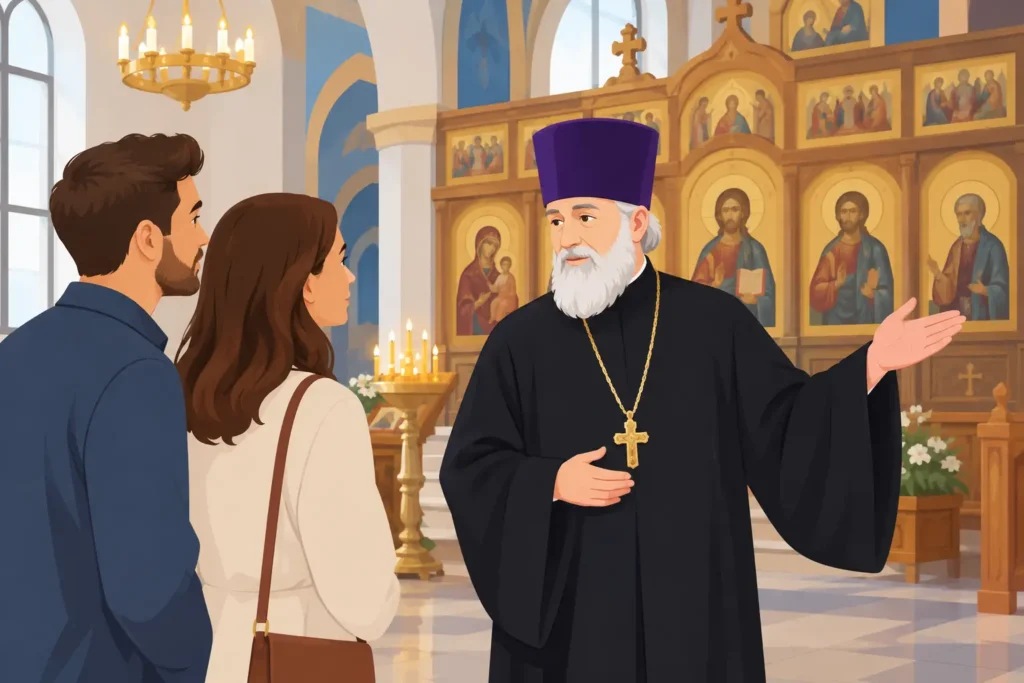
That question does not demand that everyone do everything. A parish needs order, discernment, and blessing from its clergy. Not every project is wise, and not every volunteer role fits every person. Yet every faithful member can grow in attentiveness. Look for the elderly person who needs a ride. Welcome the newcomer who does not know when to stand. Pray for the family carrying a heavy cross. Help make the parish a place where people are received not as consumers, but as brothers and sisters.
For those in Surprise, Peoria, Sun City, Glendale, Buckeye, and the surrounding western Phoenix communities, this local responsibility has particular weight. A stable Orthodox parish offers something increasingly rare: a people gathered around the altar, rooted in the apostolic faith, and willing to remain present for one another. That witness will not be built by someone else.
Begin With One Faithful Commitment
If stewardship has felt vague or burdensome, do not wait for a dramatic feeling of readiness. Begin with one clear commitment. Attend the services you are able to attend with greater faithfulness. Establish a regular gift, even if it begins modestly. Ask where help is genuinely needed. Bring your questions to the clergy rather than remaining at a distance.
God does not need our offerings, but He receives them and transforms those who give. The bread and wine brought to the altar become, by the Holy Spirit, the communion of eternal life. In a lesser but real way, the time, strength, and resources offered in love become part of the Church’s living witness. Give not to preserve an organization, but to take your place in the household of God.