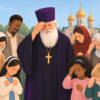
A full church on Sunday can be encouraging, but attendance alone is not renewal. The Orthodox renewal story begins where every genuine renewal begins: with men, women, and children turning from sin, receiving Christ’s mercy, and learning to live as members of His Body. It is not a campaign for religious interest. It is the patient restoration of human persons through worship, truth, repentance, and sacramental life.
For many who come to Orthodoxy, the first surprise is that the Church does not ask them to manufacture a spiritual experience. She calls them into a received life. The prayers are older than our opinions, the Creed is larger than our private preferences, and the Gospel asks more of us than occasional inspiration. That can feel demanding. It is also deeply freeing.
What an Orthodox Renewal Story Really Means
Renewal is not the same as novelty. The Church does not become alive by discarding what she has received from the apostles, the saints, and the fathers. She becomes visible in her life when Christians take that inheritance seriously again.
An Orthodox renewal story is therefore not mainly about a parish growing in numbers, although growth may follow. It is about confession becoming honest, prayer becoming regular, marriages being strengthened, children learning to stand attentively in worship, and adults accepting the long work of spiritual formation. It is about the Eucharist becoming the center of the week rather than one activity among many.
This matters because our culture often offers spirituality without obedience and community without commitment. People are told to create their own beliefs, curate their own identity, and treat every conviction as temporary. Orthodox Christianity offers something more solid: the faith once delivered to the saints, lived together in a real parish under pastoral care.
Renewal Is Not Religious Nostalgia
Some people first approach Orthodoxy because they are weary of shallow teaching or contemporary church culture. That weariness can be an honest starting point, but it cannot be the destination. Orthodoxy is not an escape into an idealized past, a collection of ancient aesthetics, or a place to feel superior to other Christians.
The Church preserves the past because the past bears witness to the living Christ. Her services, fasting seasons, icons, hymns, and sacramental discipline are not museum pieces. They train the heart to recognize reality: God is holy, sin wounds us, death is an enemy, Christ has trampled down death, and salvation is communion with Him.
A person who comes only to criticize the failures of modern Christianity will eventually become disappointed again. Every parish includes sinners. Every priest and parishioner needs repentance. Renewal becomes real when we stop standing at a distance as consumers and begin asking, “Lord, what must change in me?”
Orthodox Renewal Begins With Repentance
Repentance is not gloomy self-hatred. It is the return of the whole person to God. In the Church’s language, repentance means a change of mind and direction. We stop defending what destroys us. We tell the truth before God. We receive forgiveness and begin again.
That is why confession belongs near the center of Christian renewal. A Christian who confesses regularly does not pretend to be spiritually finished. He learns humility. A Christian who brings her wounds, resentments, temptations, and failures into the light is not crushed by them. She meets the mercy of Christ.
This is difficult work. It requires more than agreement with Orthodox doctrine, though doctrine matters greatly. It requires prayer when prayer feels dry, forgiveness when forgiveness costs us, chastity when the culture mocks it, generosity when fear grips us, and faithfulness when no one is applauding.
The good news is that the Church does not leave people alone with these demands. Christ gives grace. The saints show that transformation is possible. A faithful priest offers pastoral guidance. The parish becomes a community where repentance is normal, not shameful.
Worship Reorders the Christian Life
The Divine Liturgy does not exist to entertain, impress, or reflect our preferences. It gathers the Church before the throne of God. We hear Scripture, confess the faith, offer thanksgiving, pray for the world, and receive the Body and Blood of Christ with fear of God, faith, and love.
Over time, worship changes the way we see everything else. The week is no longer organized only around work, recreation, or errands. The calendar is marked by feasts and fasts. The home begins to echo the life of the parish through prayer, icons, Scripture, fasting, and acts of mercy.
This is one reason renewal often looks quiet before it looks dramatic. A father begins praying with his children before bed. A couple learns to forgive more quickly. A young adult replaces endless online argument with the Psalms. A family makes room for Vespers. These choices may not attract public attention, but they reshape a life.
Catechism Makes Orthodox Renewal Durable
Emotion can bring a person through the door. Clear teaching helps him remain. Those entering the Church need more than a brief introduction to Orthodox vocabulary. They need to understand who God is, what salvation means, why the Church baptizes, how Scripture is read, why the saints matter, and how to live as Orthodox Christians in a confused age.
Careful catechism also gives inquirers time. A Protestant, evangelical, Roman Catholic, Mormon, Muslim, or person with no religious background may arrive carrying serious questions and real wounds. No one should be rushed into making promises he does not understand. The Church invites honest inquiry, but she also speaks plainly about the faith she has received.
After baptism or chrismation, formation must continue. The ancient Church called this deeper instruction mystagogy: learning to understand and live the mysteries into which one has entered. A new Orthodox Christian needs help establishing a prayer rule, preparing for confession, keeping fasts wisely, reading Scripture, and finding a faithful place within parish life.
Without this patient work, conversion can remain a moment rather than become a way of life. With it, the roots grow deeper.
The Parish Is Where the Story Takes Flesh
No one becomes Orthodox merely by watching services, reading books, or winning theological debates online. Those resources can serve a real purpose, especially for people who live far from a parish or are beginning to inquire. But Christianity is embodied. We stand together, pray together, confess the same faith, bear one another’s burdens, and receive the same Holy Gifts.
For families across the west side of the Phoenix metro area, a serious parish home can be a needed answer to spiritual isolation. At All Saints of North America Orthodox Church, inquirers and faithful Orthodox Christians alike are invited into a deliberate path of worship, catechism, sacramental preparation, and ongoing formation. The goal is not simply to add names to a list. It is to help people become faithful disciples of Jesus Christ.
That process will look different from person to person. A lifelong Orthodox Christian transferring from another parish may need community and a place to serve. A seeker may need months of instruction before becoming a catechumen. A family returning after years away may first need healing and a steady rhythm of worship. The Church has one faith, but she meets people with pastoral attention in their actual circumstances.
Orthodox Renewal is a Renewal That Can Endure
The strongest sign of renewal is not excitement that fades after a season. It is endurance. It is a parish that prays when life is joyful and when life is painful. It is Christians who remain faithful through illness, grief, temptation, financial strain, and disagreement. It is children who see that the faith of their parents is not a Sunday performance but the foundation of the home.
We should pray for growth, welcome newcomers gladly, and teach the faith with confidence. Yet we should not measure the Church by the standards of marketing or spectacle. Christ did not promise that His disciples would always be admired. He promised to be with His Church.
If you are searching for more than a religious experience, begin simply: come and pray. Listen carefully. Ask honest questions. Allow the Church’s worship and teaching to address not only what you think, but how you live. The Orthodox renewal story continues whenever a person says yes to Christ and remains with Him, one repentant step at a time.