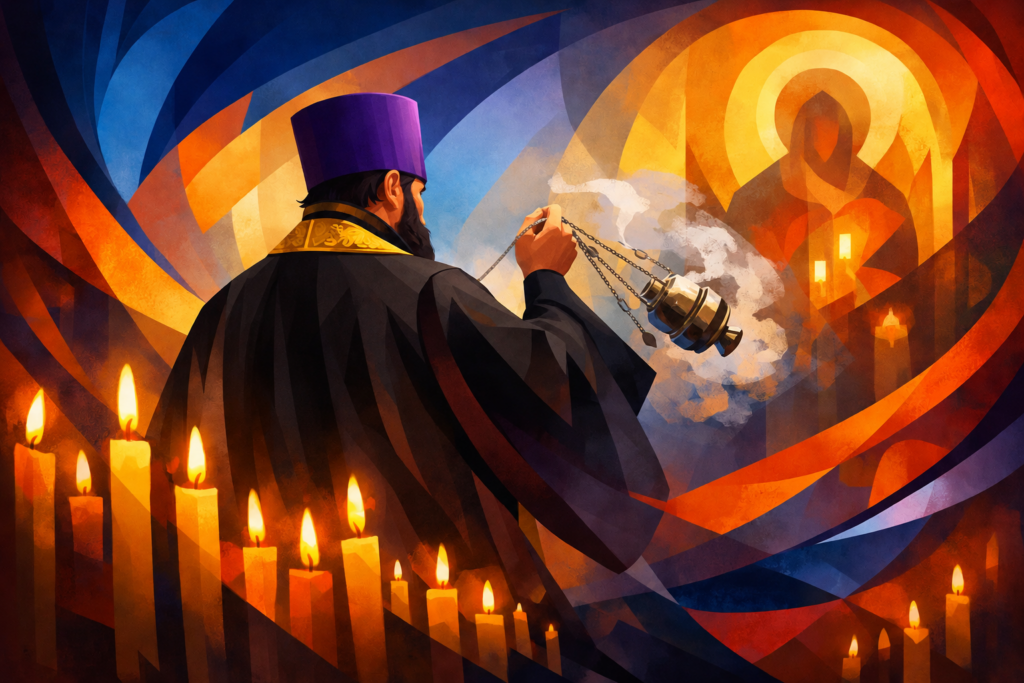
A Christian can read many books, listen to many sermons, and still not know what to do with the actual movements of his heart: resentment after an argument, fear that will not loosen its grip, pride disguised as zeal, or discouragement after repeated sin. An Orthodox spiritual direction guide begins there. It does not offer a private spirituality or a technique for self-improvement. It places the person honestly before Christ, within His Church, under pastoral care.
Orthodox spiritual direction is not reserved for monks, clergy, or people in crisis. Every Orthodox Christian needs a pattern of repentance, prayer, confession, and counsel. The aim is not to become impressive, emotionally intense, or endlessly preoccupied with oneself. The aim is to be healed, to acquire a humble heart, and to learn faithful obedience to Christ in the concrete duties of daily life.
What Orthodox Spiritual Direction Is
In the Orthodox Church, spiritual direction ordinarily grows from the sacramental and liturgical life of the parish. A priest hears confession, teaches the faith, knows the circumstances of his flock, and offers counsel according to the Church’s mind. In some settings, a mature monastic or experienced layperson may offer wise guidance, but no one replaces the priest’s pastoral responsibility or the grace of confession.
This matters because Orthodox counsel and spiritual direction is not merely religious advice. It is concerned with repentance. A spiritual father does not simply help you meet personal goals. He helps you identify the passions that distort your desires, receive God’s mercy, and take the next faithful step.
Direction also has limits. A priest is not a therapist, financial planner, physician, or controller of every personal decision. Serious mental illness, trauma, addiction, domestic abuse, and threats of self-harm may require qualified clinical or emergency help alongside pastoral care. Grace does not make professional care unnecessary, and professional care does not make repentance unnecessary. Both may be needed.
The Orthodox Spiritual Direction Guide Begins With Confession
Confession is the normal school of spiritual direction because it teaches us to stop defending ourselves. We name our sins without drama, excuses, or a detailed account of other people’s failures. We receive absolution as sinners who need Christ, not as consumers seeking reassurance.
Come prepared, but do not turn confession into a performance. A brief examination of conscience can help you notice recurring sins: anger, lust, judgment, dishonesty, neglect of prayer, refusal to forgive, careless speech, and indifference toward those in need. Say what you have done. If a pattern has persisted, say that plainly too.
Then listen. Sometimes a priest will give direct counsel. Sometimes he will ask a question that exposes an excuse you had not seen. Sometimes the needed instruction will be simple: keep the fast as you are able, apologize, stop reading material that feeds a temptation, return to your prayers, or make a difficult conversation right. Do not despise small obediences. A soul is often healed through ordinary faithfulness rather than dramatic spiritual experiences.
Confession should not become a substitute for daily repentance. If you wait for the next confession to begin changing, you may remain trapped in the same cycle. Receive counsel, act on it promptly, and return with honesty when you fail.
Bring Your Actual Life, Not an Imaginary One
Many people approach a priest with abstract questions while avoiding the real matter. They ask about end-times speculation, monastic sayings, or disputes online, but do not mention that they have stopped praying, resent their spouse, drink too much, or carry secret bitterness toward a parent. Spiritual direction becomes fruitful when it meets the life you are actually living.
Speak plainly about your state of prayer, your major temptations, your family responsibilities, and any decision that weighs heavily on you. A married father with young children, a single adult discerning marriage, a widow, a catechumen, and a retired convert will not all receive the same practical counsel. The Orthodox faith does not change, but its application requires discernment.
Be especially careful with major decisions. Moving across the country, changing careers, marrying, divorcing, pursuing monastic life, or confronting a family crisis may call for sustained counsel rather than one quick answer. Ask for prayer and guidance, but do not demand that a priest choose your life for you. Healthy obedience is neither independence disguised as freedom nor passivity disguised as humility.
A Rule of Prayer Must Be Livable
A prayer rule is not a badge of seriousness. It is a stable commitment that trains the heart to turn toward God. For most people, a modest rule kept faithfully is better than an ambitious rule abandoned after three days.
Your priest may direct you toward morning and evening prayers, a portion of the Psalter, the Jesus Prayer, Scripture reading, prostrations, or a particular canon during a difficult season. Receive the rule as medicine. Do not continually alter it because you found a stricter practice online or because someone else appears more advanced.
If your circumstances change, say so. New parents, shift workers, caregivers, and those facing illness may need an adjusted rule. The answer is not to abandon prayer but to practice it with humility. Five attentive minutes before God are not nothing. They can be the beginning of a life renewed.
Beware Spiritual Comparison and Internet Elders
The abundance of Orthodox spiritual direction material online can educate, encourage, and confuse. It can also tempt a person to become an expert in everyone else’s errors while remaining a stranger to his own heart. A sermon, podcast, or quotation from a saint cannot know your weaknesses, your family, or the counsel you were given in confession.
Do not collect teachings as weapons. Do not announce strict practices you have not been blessed to undertake. Do not treat a distant cleric, writer, or online personality as your personal spiritual father. The Church gives us local parish life for a reason: we are formed among real people who can see whether our supposed zeal is producing patience, gratitude, truthfulness, and love.
How to Receive Counsel With Freedom and Obedience
In Orthodox spiritual direction, obedience is freely offered to Christ. It is not manipulation, fear, or the surrender of conscience to another person’s preferences. A trustworthy priest does not cultivate dependence on himself. He points people toward Christ, the Scriptures, the sacraments, the saints, and a mature life in the parish.
When you receive counsel, ask enough questions to understand it, then make an honest effort to follow it. If you cannot follow it, do not hide. Explain what happened. Perhaps you misunderstood, perhaps the counsel needs adjustment, or perhaps resistance has revealed a deeper attachment that needs repentance.
There are situations in which a person should seek additional pastoral help, especially if counsel is coercive, sexually inappropriate, financially exploitative, secretive, or contrary to Orthodox faith and moral teaching. The Church is not served by hiding harm. Speak to another priest, the bishop, or appropriate civil authorities when safety or abuse is involved.
Direction Happens in the Whole Life of the Church
The deepest spiritual direction often occurs beyond the confessional line. It takes shape as you stand in the services, hear the Gospel, keep the fasts with discernment, serve someone who cannot repay you, forgive an enemy, and remain present when parish life becomes inconvenient. The Liturgy continually redirects us from self-concern to the worship of the Holy Trinity.
For inquirers and catechumens, direction includes learning how Orthodox Christians think, pray, and repent. Do not rush to imitate every visible custom before the faith has taken root. Receive instruction carefully. Ask honest questions. Let the Church’s worship and teaching correct the fragments of Christianity you may have inherited.
For those in the west valley of Phoenix, All Saints of North America Orthodox Church offers a serious path of catechesis, confession, worship, spiritual direction, and continuing formation. Whether you come from evangelical Protestantism, Roman Catholicism, another religious background, or no settled church home, you do not need to pretend that your questions are smaller than they are. Bring them into the light.
A good next step is simple: attend the services faithfully, make an appointment with a priest when appropriate, and begin telling the truth before God. Christ does not ask you to manufacture a holy life alone. He calls you into His Church, where repentance becomes not a moment of shame, but the road home.