A baptismal sponsor does not merely hold a candle, buy a cross, or stand for photographs. In the Orthodox Church, a sponsor receives a serious spiritual charge: to help the newly baptized person remain faithful to Christ and to the life of His Church. That is why baptism sponsor requirements concern more than family affection or social custom. They concern whether someone can truly confess the Orthodox faith and model it over time.
For parents preparing to baptize a child, and for adults preparing to enter the Church, choosing a sponsor deserves prayer, honesty, and pastoral guidance. The right sponsor is not necessarily the closest relative, the most generous friend, or the person least likely to feel offended. He or she is a faithful Orthodox Christian who can help lead another soul toward Christ.
What Is a Baptism Sponsor?
The baptism sponsor, often called a godparent, stands with the person being baptized and publicly confesses the Orthodox faith. At an infant baptism, the sponsor speaks on behalf of the child, renounces Satan, joins himself or herself to Christ, and recites the Creed. The child will later need to embrace that confession personally, but the sponsor begins by making a real promise before God and the Church.
For an adult baptism, the sponsor does not replace the adult’s confession of faith. Rather, the sponsor bears witness to the catechumen’s sincere preparation and receives a responsibility to encourage him or her in the Christian life after baptism.
This is why godparent-hood is not honorary. It creates a spiritual relationship marked by prayer, example, instruction, and loving accountability. A sponsor should be able to say, years later, “Let us go to confession,” “Come with me to Liturgy,” or “Let us pray through this difficulty together.”
Core Baptism Sponsor Requirements
The precise pastoral practice can differ among Orthodox jurisdictions and according to the blessing of the priest and bishop. A family should therefore speak with the parish priest early in the baptismal preparation process. Still, several requirements are consistent across Orthodox practice.
The sponsor must be an Orthodox Christian
A baptism sponsor must be a baptized and chrismated Orthodox Christian. A person from another Christian confession may deeply love Christ, attend the service, and support the family, but he or she cannot serve as the Orthodox sponsor. The sponsor is asked to confess the Orthodox faith on behalf of the baptized person. That confession cannot be treated as a formality.
This can be difficult when parents want to honor a beloved Roman Catholic grandparent, Protestant sibling, or close friend from another faith tradition. Their presence can still be meaningful. They may attend, pray for the child, and celebrate with the family. But the spiritual office of sponsor belongs to an Orthodox Christian who can genuinely make the baptismal confession.
The sponsor must be in good standing with the Church
Being Orthodox on paper is not the same as living as an Orthodox Christian. A sponsor should be an active member of a canonical Orthodox parish, participate regularly in the sacramental life, and be prepared to receive Holy Communion with a clear conscience and the blessing of his or her priest.
Good standing does not mean sinlessness. Every Orthodox Christian depends upon repentance and mercy. It does mean that a sponsor cannot publicly reject the Church’s faith or live in open disregard of it while promising to guide another person in that same faith.
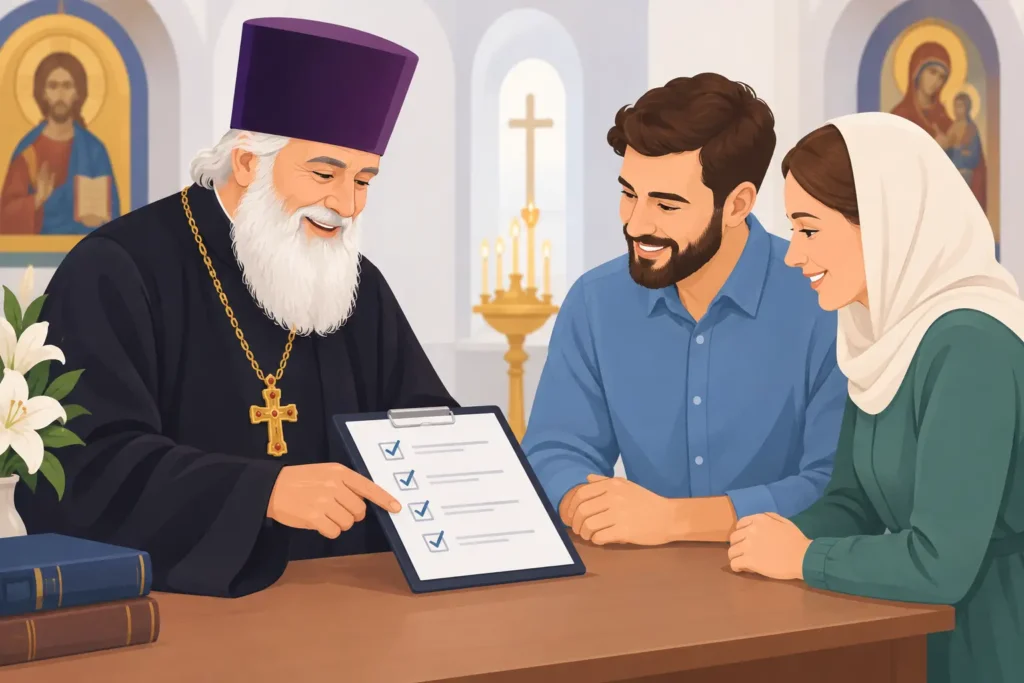
The priest may ask the prospective sponsor to speak with his own parish priest, go to confession, or prepare for Communion before the baptism. This is not needless bureaucracy. It protects the dignity of the sacrament and helps the sponsor approach the day with reverence.
The sponsor should know and confess the Creed
At the baptism, the sponsor is ordinarily expected to recite the Nicene Creed. He or she should understand its basic meaning, not simply repeat memorized words. The Creed confesses the Holy Trinity, the incarnation of the Son of God, Christ’s death and resurrection, the Church, baptism, and the life of the age to come.
A sponsor who cannot confess the Creed with conviction is not ready to make promises on behalf of another person. Preparation should include learning the Creed, reviewing the baptismal service, and asking the priest questions before the day arrives.
Parents do not sponsor their own child
Orthodox parents already carry the first and irreplaceable responsibility for raising their children in the faith. They bring the child to the Church, teach prayer at home, bring him or her to confession and Communion, and shape the home around Christ. The sponsor supports that calling as a spiritual parent, but does not duplicate or replace it.
For this reason, a child’s natural parents do not serve as the baptismal sponsor. The Church calls for another faithful Orthodox Christian who can stand beside the family and strengthen the child’s formation over the years.
Does a Sponsor Need to Be the Same Sex as the Person Being Baptized?
Traditionally, one sponsor is chosen, and that sponsor is usually the same sex as the person being baptized. This practice reflects the sponsor’s ongoing role of spiritual example and guidance. A godfather can especially guide a godson in Christian manhood, while a godmother can especially guide a goddaughter in Christian womanhood.
Many parishes also permit more than one godparent, particularly when both are Orthodox Christians in good standing. Yet more names do not necessarily mean more spiritual care. One faithful sponsor who prays, stays present, and lives the faith is far better than several people chosen for appearances.
Because local practice varies, do not assume that a family custom or advice found online applies in every parish. Ask the priest what is expected before invitations are made or baptismal certificates are printed.
What a Sponsor Should Do Before the Baptism
A sponsor should begin serving before the baptismal day. He or she should meet with the parents or catechumen, learn the parish’s expectations, and prepare spiritually. If the sponsor lives far away, that does not automatically make him or her unsuitable, but distance requires intention. A godparent cannot fulfill this vocation through occasional birthday messages alone.
Before the service, the sponsor may be asked to provide or help provide items such as a baptismal cross, a white garment, candles, oil, or towels. These customs can be beautiful, but they are secondary. The essential preparation is spiritual: prayer, confession when needed, fasting according to the priest’s guidance, and a sincere readiness to confess Christ.
Sponsors should also arrive early, dress modestly, and understand the movements of the service. Baptism is not a private family ceremony with religious decoration. It is the person’s entrance into the death and resurrection of Christ and into the visible life of His Church.
The Work Begins After the Baptism
The strongest evidence of a faithful sponsor appears after the baptismal garment is folded away. A sponsor prays regularly for the godchild. He or she remembers baptismal anniversaries, offers an age-appropriate Orthodox Bible, icon, prayer book, or book about the saints, and encourages real participation in the parish.
For a child, this may mean attending services together, talking about the feast days, and being a trustworthy adult who reinforces what parents teach at home. For an adult convert, it may mean meeting for coffee after Liturgy, answering practical questions, encouraging patience during spiritual struggle, and helping the newly baptized person build relationships within the parish.
A sponsor should never attempt to become a rival to the parents or to the priest. The sponsor’s work is humble and steady: to point the godchild toward Christ, toward confession when repentance is needed, and toward the worshiping life of the Church.
Choosing a Sponsor With Wisdom
Choose a sponsor based on faithfulness, not pressure. A relative may be an excellent choice if he or she actively lives the Orthodox faith. A dear friend may also be the right person. But if someone is rarely present in church, does not receive the sacraments, or treats Orthodox teaching as optional, affection alone does not make that person ready for this responsibility.
It is also wise to consider the person’s stability, character, and willingness to remain involved. Ask plainly: Will this person pray for my child? Will he or she encourage church life? Can this person offer a faithful example when my child becomes a teenager or faces adult struggles?
If you are preparing for baptism in the western Phoenix area, speak with the clergy at All Saints of North America Orthodox Church before finalizing your choice. A pastoral conversation can prevent confusion and help the baptism begin with peace, clarity, and proper preparation.
The best sponsor is not a ceremonial participant for one sacred afternoon. He or she is a fellow pilgrim who will keep pointing the baptized person toward the chalice, the prayers, the saints, and the living Christ who makes all things new.