A person may first enter an Orthodox church because of the beauty: icons, incense, chanting, solemn prayer, and a service that does not resemble the religious gatherings they have known. Yet Orthodox Christianity growth cannot be explained by aesthetics alone. Beauty may bring someone through the door, but truth, repentance, sacramental life, and a real parish family are what keep a person in the Church.
Across America, people are weary of religious confusion. They have watched churches revise doctrine to match the moment, reduce worship to entertainment, or offer inspiration without the demanding work of discipleship. Many are not looking for novelty. They are looking for the faith once delivered to the saints – a faith that can bear the weight of suffering, raise children, confront sin, and lead men and women into communion with Christ.
Orthodox Christianity Growth Is About Roots
The Church does not grow by inventing a new message. She grows because Christ remains the same. Orthodox Christianity preserves the apostolic faith in her worship, Scriptures, councils, saints, sacraments, fasting, and daily life of prayer. For a seeker who has spent years sorting through competing interpretations of Christianity, this continuity is not a small matter. It answers a pressing question: Where is the Church Christ founded?
This does not mean that every visitor arrives with certainty. Some come from evangelical backgrounds and must reconsider what they have been taught about the Church, baptism, Holy Communion, and the saints. Roman Catholics may recognize much in Orthodox worship while facing serious questions about papal claims and later developments. Others come with little Christian formation at all. They may simply know that a life built on consumption, self-definition, and endless distraction has left them spiritually hungry.
The Orthodox answer is not, “Trust your feelings.” It is, “Come and see.” Attend the services. Hear the prayers. Read the Scriptures with the Church. Ask hard questions. Begin to repent. The faith is public, concrete, and lived.
The Limits of Counting Attendance
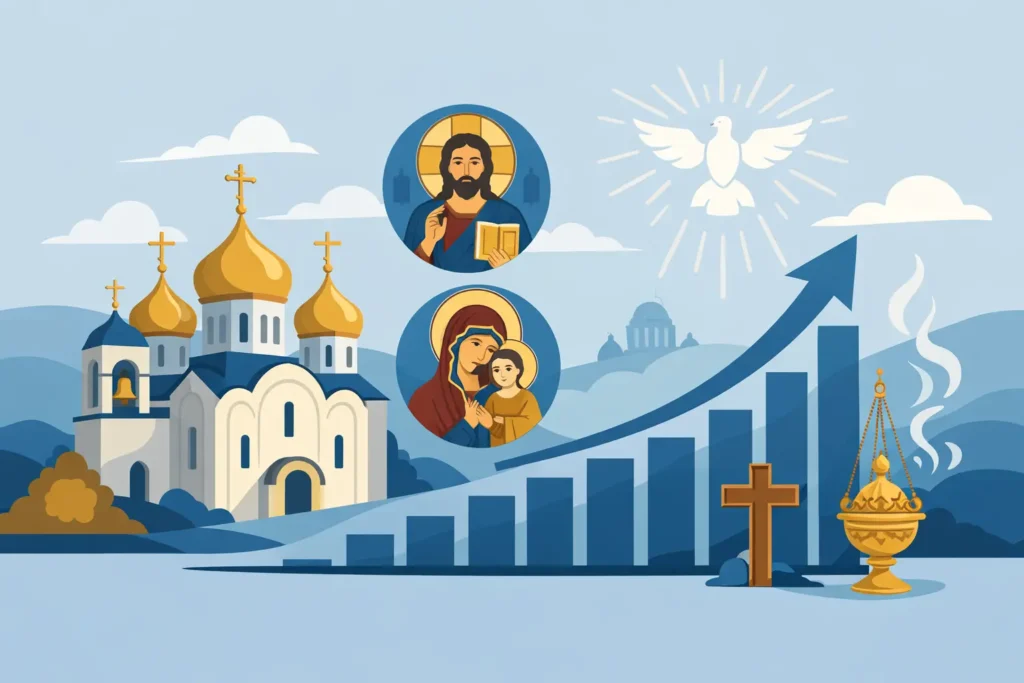
Church growth can be measured in attendance, baptisms, catechumens, and new households. These are meaningful signs, and a parish should receive them with gratitude. But numbers alone can conceal as much as they reveal. A crowded service does not necessarily produce mature Christians.
The deeper question is whether people are being formed. Are they learning to pray when no one sees them? Are marriages becoming more faithful? Are parents teaching their children the faith? Are people confessing their sins, reconciling with neighbors, giving generously, and learning obedience to Christ? A parish that takes these questions seriously may grow more slowly at times, but it is building on firmer ground.
There is a trade-off here. A church can make entry easier by avoiding difficult teachings, minimizing fasting, or treating worship as a product tailored to visitors. But it cannot do so without eventually weakening the very life that drew serious seekers in the first place. Orthodox Christianity welcomes every person, but it does not pretend that following Christ costs nothing.
Serious Worship Gives People Something Real
The Divine Liturgy does not exist to manufacture a mood. It is the worship of heaven offered on earth, the gathering of the baptized before the throne of God. Its prayers teach the faith while they form the heart. Week after week, the Church proclaims the Holy Trinity, the Incarnation, Christ’s victory over death, the communion of saints, and the hope of resurrection.
This is one reason many newcomers find Orthodox worship arresting. They are not being asked to evaluate whether they enjoyed the service. They are being invited to stand before God. That can feel unfamiliar, even difficult. The service is not rushed. Much of it is sung. Visitors may not know when to stand, cross themselves, or respond.
A hospitable parish should help without turning the Liturgy into a performance for beginners. A simple explanation, a welcoming conversation, and patient guidance matter greatly. Yet the goal is not to make Orthodox worship resemble what someone already knows. The goal is to help them enter the worship of the Church.
Growth Requires Clear Teaching
Interest without instruction produces confusion. Someone may be moved by an icon or captivated by a feast day, but Orthodox Christianity requires more than appreciation. It requires a willing reception of the Church’s faith and a commitment to live it.
That is why careful catechism matters. Inquirers need room to ask honest questions, especially when their previous beliefs are being challenged. They need to understand the Bible in its Orthodox setting, not merely collect verses for private argument. They need to learn why Orthodox Christianity honors the Theotokos, confess sins, fast, venerate icons, baptize infants, and receive Holy Communion with reverence.
Good catechism is neither salesmanship nor a debate club. It is preparation for a new life. It gives a person the language, practices, and doctrinal clarity needed to enter the Church faithfully. It also helps clergy discern readiness. Baptism and chrismation are not graduation ceremonies at the end of a class. They are entrance into a covenant life.
Why Patient Formation Matters After Baptism
One of the most damaging assumptions in modern religious culture is that conversion is finished once a person makes a decision. The Orthodox Church sees baptism as a true beginning: death and resurrection with Christ, followed by a lifelong struggle to grow in holiness.
Newly baptized and chrismated Christians need mystagogy – deep instruction into the mysteries they have received. They need help establishing a prayer rule, learning the rhythm of fasting and feasting, preparing for confession, reading Scripture, and finding their place in parish life. They also need patience when old habits, fears, and temptations do not disappear overnight.
This work is especially necessary for converts. A person can leave a former religious community yet continue to carry its assumptions. Another may be tempted to turn Orthodoxy into an identity badge, a collection of online arguments, or an escape from ordinary responsibilities. The Church calls us to something much more demanding and much more healing: humble repentance, love of neighbor, and faithful participation in the Body of Christ.
A Parish Must Be Both Local and Open-Handed
Digital teaching has allowed many people to encounter Orthodoxy before they ever visit a parish. Live streams, lectures, Bible lessons, and catechetical materials can be genuine help, particularly for those who live far from an Orthodox church or who are cautious about taking a first step in growth. They can correct misinformation and give seekers a clearer picture of what Orthodoxy actually teaches.
But online learning cannot replace parish life. Orthodox Christianity is not received as private content. We are baptized into a people. We learn to forgive actual people, serve actual people, and pray beside actual people. We receive the sacraments in the gathered Church, under the pastoral care of clergy who know our names and can speak truthfully into our lives.
For families and seekers in the west Phoenix area, that local reality matters. A parish home should not merely offer a Sunday service. It should provide a stable path from first visit to catechism, sacramental preparation, confession, continued formation, and a life of service. All Saints of North America Orthodox Church seeks to offer precisely that kind of serious and welcoming home.
Church Growth Through Faithfulness
No parish controls growth. The Holy Spirit adds growth to the Church, and Christians should be cautious about treating people as statistics or adopting worldly strategies simply to appear successful. There will be seasons of visible growth and increase and seasons when the work is quieter. Faithfulness remains the calling in both.
The task is clear: worship God rightly, teach the apostolic faith plainly, welcome seekers honestly, prepare converts carefully, and continue walking with them after they enter the Church. When a parish does this, it gives people more than a religious event. It gives them a place to be healed, challenged, forgiven, and formed.
If you are searching for historic Christianity, do not settle for a distant impression of Orthodoxy. Come to the services, speak with a priest, and begin the patient work of learning. Christ does not call us to observe the Church from afar. He calls us home.