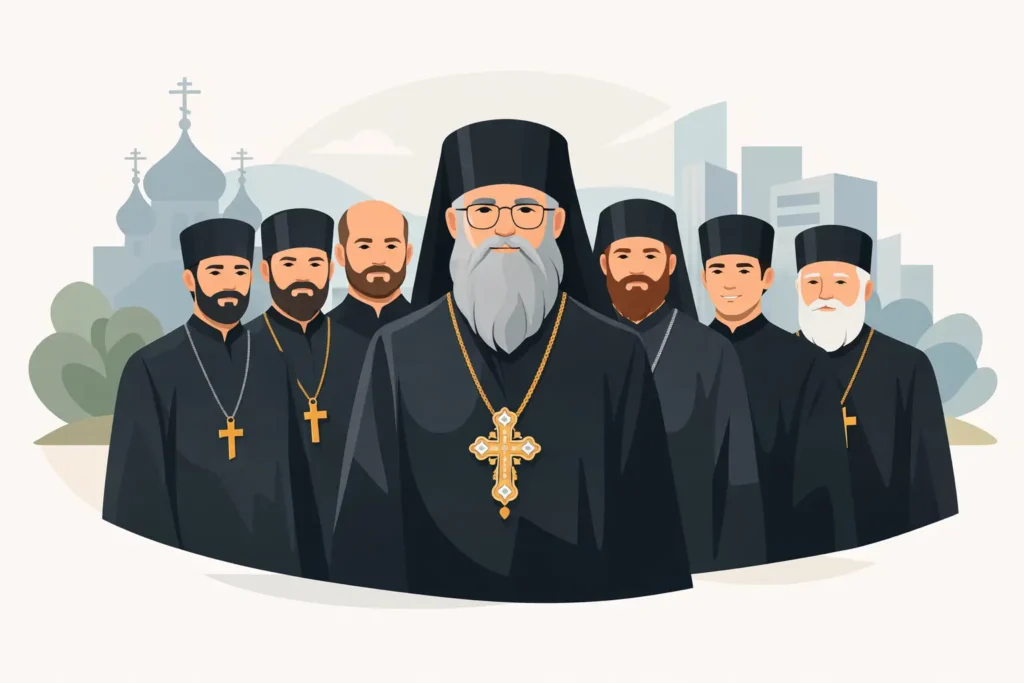
A priest may be able to speak warmly, welcome visitors graciously, and lead a beautiful service. Those are real goods. Yet when a family is facing a serious moral decision, when an inquirer asks whether the Church truly teaches what she has always taught, or when a soul needs to confess sin honestly, something more is required. Knowledgable Orthodox clergy are needed because the Christian life is not sustained by personality, general encouragement, or religious preference. It is sustained by the truth of Christ faithfully received, taught, and lived within His Church.
For many people searching for an Orthodox home, the question is not merely, “Is this parish friendly?” It is, “Will I be formed here?” That question reaches to the heart of pastoral ministry. A clergyman must know the Scriptures, the dogmatic teaching of the Church, the holy services, the canons, and the lived wisdom of the saints. He must also know how to apply that inheritance with discernment to actual people – married couples, parents, the grieving, the doubtful, the newly baptized, and those carrying wounds they can scarcely name.
What Knowledgable Orthodox Clergy Actually Provide
Knowledge in the Church is never meant to be a collection of impressive facts. A priest is not ordained to win arguments or deliver lectures from a distance. He is called to proclaim Christ, guard the flock, offer the mysteries, and lead people into repentance and communion with God.
That requires doctrinal clarity. Orthodox Christianity does not reinvent its faith whenever the surrounding culture changes. The Church receives the apostolic faith and confesses it plainly: the Holy Trinity, the divinity and humanity of Jesus Christ, His saving death and resurrection, the authority of Holy Scripture within Holy Tradition, the reality of sin, the necessity of repentance, and the life of grace in the sacraments.
A clergyman who knows this faith can teach it without embarrassment or vagueness. He can explain why Orthodox Christians baptize infants, confess sins to a priest, honor the saints, fast, venerate icons, and call the Eucharist the true Body and Blood of Christ. He can address the sincere objections of Protestants, Roman Catholics, Muslims, Mormons, and secular seekers without turning the conversation into a contest.
But theological knowledge must become pastoral wisdom. Not every question is asked for the same reason. One person asks about prayer because he wants to grow closer to God. Another asks because he is afraid to surrender control. A faithful priest listens carefully enough to recognize the difference. He gives the truth, but he does not use truth as a weapon.
Knowledge Serves the Cure of Souls
Orthodoxy understands salvation as more than agreeing with correct ideas. Christ heals and restores the human person. The Church calls this healing repentance, purification, illumination, and union with God by grace. Clergy need deep knowledge because people do not bring merely intellectual questions to the parish. They bring pride, fear, addiction, resentment, marital conflict, grief, confusion, and spiritual fatigue.
A priest cannot replace a physician, licensed counselor, or other needed professional. There are circumstances in which wise pastoral care includes encouraging someone to seek appropriate medical or mental health support. Yet spiritual guidance cannot be outsourced. The priest helps a person see sin truthfully, receive God’s mercy, establish a rule of prayer, make a sincere confession, and remain connected to the worshiping life of the Church.
This is why shallow advice is not enough. “Just be positive” cannot carry a Christian through temptation. “Follow your heart” is not Orthodox counsel. The heart itself must be purified and brought under the lordship of Christ. A knowledgeable pastor knows the difference between guilt that leads to repentance and despair that tries to cut a person off from hope.
Why Orthodox Clergy Knowledge Matters for Inquirers
People entering Orthodoxy often arrive with a mixture of joy and uncertainty. They may have read the Church Fathers, watched lectures, attended several liturgies, and still feel overwhelmed by the practical questions. What should I do when I visit? When may I receive Communion? How does confession work? What does fasting look like for a beginner? How do I explain this change to my spouse, children, or parents?
These questions deserve more than quick answers. They need a deliberate path of formation. Catechism introduces the faith as a coherent whole, not as isolated customs. It teaches the Creed, Scripture, worship, sacraments, prayer, morality, Church history, and the shape of Orthodox life at home. It also gives inquirers time. No one should be rushed toward baptism or chrismation simply because they are enthusiastic in the first months.
Strong clergy-led catechesis also protects people from a common mistake: treating Orthodoxy as an aesthetic escape from modern life. The icons, incense, chanting, and ancient prayers are beautiful because they reveal the heavenly reality of worship. But the Church is not a refuge for religious consumers looking for a more dramatic experience. She calls every person to take up the cross.
At All Saints of North America Orthodox Church, serious catechesis and ongoing mystagogy reflect this conviction. Preparation for entering the Church is not a gatekeeping exercise. It is an act of care. After baptism or chrismation, the newly received faithful continue learning how to pray, fast, confess, serve, and endure in the life they have entered.
Knowledge Does Not Mean Rigidity Without Discernment
Some people hear “clear doctrine” and imagine a priest who treats every pastoral situation as identical. That is not the Orthodox ideal. The Church has canons, disciplines, and settled dogmatic boundaries. She also has pastoral discernment, often called economia, exercised with sobriety and accountability.
A priest may give different guidance to two people who appear to have the same question because their circumstances, responsibilities, health, spiritual maturity, and repentance differ. One person may need a firmer boundary. Another may need patience and a smaller first step. This is not inconsistency when it remains faithful to the mind of the Church. It is the work of a spiritual physician.
At the same time, “pastoral flexibility” must never become an excuse for denying what the Church teaches. A pastor does not love people by telling them that sin is harmless. Nor does he lead them to Christ by making the Gospel more acceptable to the spirit of the age. Genuine mercy tells the truth and stays with the person who is learning to live it.
How to Recognize Sound Orthodox Clergy-Led Formation
You do not need to interrogate a priest or expect immediate answers to every complex question. Priests are human, and no Orthodox clergyman knows every detail of every subject. The issue is whether his ministry is rooted, accountable, and capable of guiding people toward Christ rather than toward himself.
Look for preaching that opens the Scriptures in harmony with the Church’s worship and doctrine. Look for instruction that explains not only what Orthodox Christians do, but why they do it. Look for confession that is treated reverently, not casually. Look for a parish where newcomers are welcomed warmly but are also invited into real formation, regular worship, prayer, fasting, generosity, and service.
Pay attention to whether difficult teachings are avoided. A parish should not major in controversy, but it should not hide the Church’s moral and doctrinal claims either. Clarity brings peace over time. Confusion may feel easier at first, especially when a person is carrying difficult questions, but it does not build a stable Christian life. Orthodox clergy know what it takes.
Finally, observe the fruit. Does the clergy’s teaching produce humility, repentance, courage, patience, and love for the Church? Does it lead people to pray more faithfully and forgive more readily? Does it strengthen marriages, equip parents, and help the suffering remain near Christ? Knowledge that bears this fruit is not merely academic. It is knowledge ordered toward salvation.
A parish home is found over time, through prayer, worship, conversation, and faithful participation. If you are seeking the historic Christian faith in the west Phoenix area, come with your questions, but also come ready to be formed. The Church does not offer a spiritual shortcut. She offers the living Christ, faithfully proclaimed and patiently received.