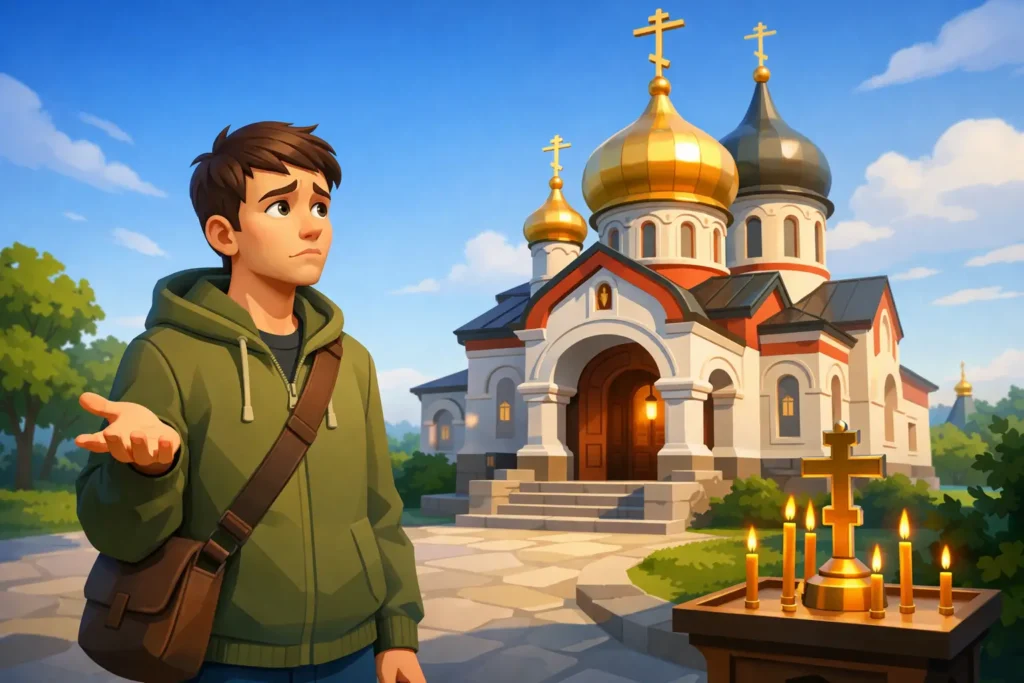
A catechumen does not first need to master every Orthodox custom, purchase a shelf of books, or develop confident answers to every theological question. What do catechumens need first? They need to place themselves under the life of the Church: to worship faithfully, receive pastoral direction, and begin the work of repentance with humility.
Catechumenate is not an academic course that ends with a test. It is preparation to be united to Christ in His Church through baptism or chrismation. That preparation involves learning the faith, certainly, but learning is meant to become prayer, worship, obedience, and a changed way of life. The first task is not to perform Orthodoxy. It is to receive it.
What Do Catechumens Need First?
First, catechumens need a real relationship with a parish and its priest. Orthodox Christianity is not entered privately, through reading alone or online instruction alone. The Church baptizes and receives persons into a concrete Eucharistic community, where believers pray together, bear one another’s burdens, confess the same faith, and submit their lives to Christ.
This is why regular attendance at the divine services matters from the beginning. The services teach the faith in their prayers, Scripture readings, hymns, feasts, and fasting seasons. A person can understand many Orthodox terms on paper and still need time to let the Church’s worship reshape his imagination. Standing at Vespers, hearing the Psalms, keeping the feast days, and returning week after week are not extras. They are part of catechesis.
For those in the west Phoenix area, that means choosing faithfulness over convenience when possible. A parish may be a drive from Surprise, Peoria, Glendale, Buckeye, or Sun City. Yet a stable parish home is worth ordering one’s schedule around. Spiritual formation requires more than an occasional visit when nothing else is planned.
Begin With Repentance, Not Religious Self-Improvement
The catechumen comes to Christ not as a consumer comparing spiritual experiences, but as a sinner asking for mercy. Repentance is therefore the proper beginning. This does not mean despair, public self-exposure, or trying to create a dramatic conversion story. It means telling the truth about one’s life before God and becoming willing to be corrected.
Many inquirers arrive from Christian backgrounds where faith was sincere but fragmented. Others come from no settled Christian practice at all. Some carry wounds from churches, marriages, family conflict, addiction, sexual sin, anger, pride, or years of indifference toward God. The Orthodox Church does not dismiss these realities, nor does she reduce a person to them. She calls each person to repentance, healing, and a new life in Christ.
A priest will help a catechumen discern what repentance requires at this stage. Not every matter is addressed in the same way or at the same pace. Serious moral questions should never be managed by private guesswork or internet advice. Receive guidance directly and honestly. The goal is not merely to meet a requirement before baptism. The goal is to begin a lifelong turning of the heart toward God.
Establish a Small, Faithful Rule of Prayer
Catechumens need prayer early, but they do not need an impressive prayer rule. A small rule kept faithfully is better than a demanding rule abandoned after two weeks. Begin with the prayers your priest blesses, make the sign of the cross reverently, and set aside a consistent time each morning and evening to stand before God.
Prayer is not a technique for producing spiritual feelings. There will be dry days, distracted days, and days when prayer feels like nothing more than obedience. Pray anyway. The heart is trained through faithful return. Ask God for mercy, give thanks, name those in need, and let the words of the Church teach you how to speak to Him.
This is also a good time to simplify. A catechumen who spends hours consuming arguments, debates, and Orthodox content online can easily become informed without becoming prayerful. Use good resources with discernment, but do not let religious media replace prayer, attendance, Scripture, or counsel from your priest.
Learn the Faith as the Church Confesses It
Catechumens should expect serious instruction. Orthodoxy is not vague spirituality adorned with ancient imagery. It is the apostolic faith: the Holy Trinity, the incarnation of the Son of God, Christ’s death and resurrection, the Holy Mysteries, the communion of saints, the authority of Holy Scripture within Holy Tradition, and the final judgment and resurrection of the dead.
Yet catechesis is not a collection of isolated doctrines. The Church teaches doctrine because truth saves. To confess that Jesus Christ is truly God and truly man changes how we pray, how we understand salvation, how we honor the Theotokos, how we receive the Scriptures, and how we live in the body.
Read what is assigned. Attend catechism consistently. Ask questions plainly. There is no shame in not knowing the difference between a service book and an icon, or in needing help with words that are unfamiliar. There is, however, danger in assuming that personal preference is the final authority. The catechumen’s work is to learn how the Church speaks, prays, and believes before deciding he has fully understood her.
Do Not Rush the Calendar
People often ask how long catechumenate should last. The honest answer is that it depends. A priest considers a person’s prior baptism, Christian background, family circumstances, understanding of the faith, moral situation, participation in parish life, and demonstrated readiness. The Church does not treat baptism as a graduation ceremony, nor should a catechumen treat delay as rejection.
A longer period of preparation can be a mercy. It allows the roots of a new life to go deeper before the pressures of old habits, family expectations, or spiritual confusion test them. Conversely, the purpose is not to keep a sincere person perpetually at the threshold. The priest and parish should provide a clear path, not uncertainty. Trust the process and speak openly when questions or concerns arise.
Receive the Church’s Discipline With Peace
Catechumens participate in the life of the parish, but their participation has a proper order. They are present for the services, prayers, instruction, fellowship, and works of mercy. They prepare for reception into the Church. But they do not receive Holy Communion until they have been baptized or chrismated and are blessed to commune.
This boundary is not a statement that catechumens are unwanted. It is a confession that the Eucharist is the sacramental union of those already received into the Church. The longing to commune can be painful, and it should be taken seriously. Let that longing become a deeper desire to be joined fully to Christ, not a reason for resentment or impatience.
Fasting likewise should be approached with guidance. Orthodox fasting is a school of obedience and self-control, not a dietary identity or a contest of strictness. Health, pregnancy, age, work conditions, family responsibilities, and a person’s spiritual history can affect what is appropriate. Follow the blessing you are given without comparing your practice to someone else’s.
Let Parish Life Become Real Life
A catechumen needs more than a place to attend. He needs a people among whom he can learn to live as a Christian. Stay for fellowship when appropriate. Learn names. Offer help in modest ways. Bring your children into the rhythm of parish life. Allow mature Orthodox Christians to become examples, while remembering that every parishioner is also in need of repentance.
Do not expect a parish to be free of weakness, awkwardness, or disappointment. The Church is holy because Christ is holy, not because her members are already perfected. At the same time, a healthy parish should call people to holiness, teach the faith clearly, and provide accountable pastoral care. If you are preparing to enter Orthodoxy, do not remain anonymous at the edge of the community.
At All Saints of North America Orthodox Church, catechumens are not asked to manufacture a new identity overnight. They are invited to enter the life Christ has given His Church: to pray, learn, repent, serve, and prepare carefully for the holy mysteries.
The first need is simple, though not easy: show up before God with humility and keep showing up. Bring your questions, your sins, your history, and your hope. Receive the Church’s instruction with patience. Christ does not call catechumens to a religious hobby. He calls them home.