Cursed is the man that doeth the work of the Lord carelessly. (Jer. 48:10) You have begun to sing in the choir; therefore, you glorify the Lord in the image of the heavenly hosts, who ceaselessly sing praise to the glory of their Creator and Lord. How fortunate you are! But do you acknowledge the full sacredness and importance of this godly work, which incomparably more than any other work is worthy to be called godly work? If not, then it is not superfluous to remind you of the threatening and terrible words of the Prophet: Cursed is the man that doeth the work of the Lord carelessly (Jer. 48:10). You see to what a terrible accountability those are liable who negligently and carelessly … [Read more...]
Blessing a Homestead at 7100 ft. Elevation
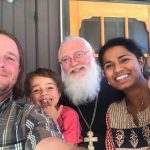
Thursday, May 24 was the day of a special homestead blessing in remote Pinetop, AZ. Adam and Deepa Hague welcomed Fr. John to their homestead for a blessing of the home, confession, and communion. The beautiful setting was idyllic! Gardens, ponds, grottos, goat pens, trampolines, containers, vehicles, appliances, and a hand-built home - everything needed for a functioning, off-grid homestead was blessed, and then some. "Lots of questions from the children about Church, the priesthood, and even my own family! Truly, I felt welcomed as an honored guest as soon as I arrived," said Fr. John. Enjoy this little photo gallery of our visit. We'll be visiting again in July! … [Read more...]
Inaugural Patronal Feast: June 9-10th, 2018
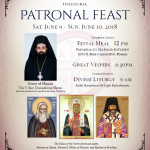
All Saints of North America Orthodox Church presents our Inaugural Patronal feast on Sat. June 9 - Sun. June 10, 2018. Don't miss this celebration of our glorious patron saints as we gather together for fun, food, and fellowship - the Orthodox way! Download this PDF brochure of the event! Contact Fr John for more information, to reserve your place at our Festal Luncheon: Fr. John A. Peck 928-910-2186 … [Read more...]
The Glory of God on a Cloudy Saturday Morning
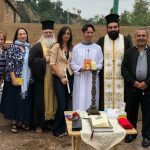
The Church in Southern California is growing! Saturday morning was a cool cloudy morning in LaVerne, CA, but many hearts were warmed by the glory of God and the joy of the growing Orthodox faith. Fr. Damaskinos Alazrai, Archimandrite of the Ecumenical Throne, and Fr. John A. Peck, rector of All Saints of North America in Sun City, AZ gathered with family members for the baptism of Jeffrey Hutson, 37, of North Hollywood, CA after several months of catechism. Mr. Hutson works as an air traffic controller, and must regularly and often travel back and forth from both coasts, making his catechism more difficult. Fr Damaskinos asked Fr John, who has decades of experience in teaching and … [Read more...]
Pictures of Historic Visit of Archbishop Demetrios
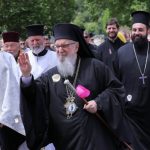
On Friday May 11, His Eminence Demetrios, Geron of America, arrived in California for his historic visit to the Vicariate for Palestinian/Jordanian Orthodox Christian Communities in the US. Over the busy weekend, he met with Vicariate clergy, visited three Vicariate parishes, and culminated his visit with the Door Opening ceremony and hierarchical liturgy at St. George Cathedral in Daly City. View More Pictures Here … [Read more...]
Choosing Between Marriage and Monasticism
Most young people don’t know how to discover their calling in the life. Whether to dedicate themselves to monasticism or select the marriage path. Some have the feeling that monasticism is a more superior choice than marriage and that marriage represents a lower situation. Others believe that any young man who chooses to become a monk is a coward who avoids the responsibilities of citizenship. Bishop of Nafpaktos, Hierotheos provides a warm insight and a clear view of the essence of both marriage and monastic life, based on the teaching of the Eastern Church Fathers. “Both marriage and monasticism are powerful symbolic ways of straining toward the ultimate goal of love. Celibacy and … [Read more...]
How Serious Are Orthodox Bishops About The Eucharist?
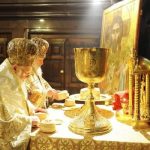
GREEK ORTHODOX METROPOLIS OF DENVER May 1, 2018 Teleturgical Encyclical 29 The Pious Priests The Faithful Parish Members Holy Metropolis of Denver Beloved in the Lord, It has come to my attention that there are an increasing number of parishioners in some of our parishes who come forth to receive Holy Communion, but insist that the priest not give to them of the Body of Christ but only of His Blood. Those parishioners explain to their priests that their doctors -- obviously not Orthodox Christians — tell them not to eat any kind of bread because it will harm them. If there are Orthodox Christians in our parishes who believe that, after the Holy Spirit consecrates the Bread and … [Read more...]
The Baptism of Infants
How long have Christians been baptizing infants? From the beginning. For more information, see Articles on Infant Baptism at Preachers Institute … [Read more...]
Lent, Holy Week, Pascha at ASONA 2018
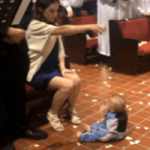
As a new mission of the Orthodox Church, we have been striving to do what we can for a full spiritual and liturgical life in our midst and for our people. What a glorious season! Here are some pictures from our journey. Enjoy! … [Read more...]
Baptisms on Lazarus Saturday: A Joyous Event in the Life of Arizona Orthodoxy
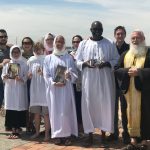
Good news from the new parish in Arizona! The first baptisms at the All Saints of North America Orthodox Church in Arizona took place today in the city of Buckeye, AZ. Fr. John A. Peck baptized into the Church on Lazarus Saturday the family of Paul and Amy Jones, who were surrounded not only by their godparents/sponsors, but also parishioners and non-Church family members who came to celebrate the event. “It was a glorious event,” said Fr. John “So much joy! So much wonder. So much love.” A picnic luncheon was served afterwards. The gallery of photos is below. The newly illumined members of All Saints of North America will be wearing their baptismal robes for the next 8 days, … [Read more...]
- « Previous Page
- 1
- …
- 25
- 26
- 27
- 28
- 29
- …
- 32
- Next Page »