A person does not become Orthodox because an icon looked beautiful online or because a debate clip won an argument. Those things may awaken interest, but Orthodox conversion trends 2026 point to a deeper hunger: people want a Christian life that can bear the weight of truth, suffering, family life, repentance, and death.
Many seekers have spent years moving through a religious landscape of competing interpretations, thin community, and therapeutic messages that do not ask much of them. They are not merely shopping for a different worship style. They are asking whether the Church Christ founded still exists as a visible, worshiping, teaching, sacramental body.
That question deserves more than a quick answer. It deserves patient catechism, real prayer, honest pastoral guidance, and a parish life strong enough to receive a person not simply for a moment, but for a lifetime.
Orthodox Conversion Trends 2026: A Search for Roots
The most visible trend is not novelty. It is a return to continuity. Seekers are drawn to Orthodoxy because it refuses to reinvent Christianity for every generation. The Scriptures are read within the Church that received, preserved, and proclaimed them. The Creed is confessed rather than revised. Worship forms the heart through fasting, feasting, confession, Holy Communion, the lives of the saints, and the rhythm of the liturgical year.
For many former evangelicals and Protestants, the question begins with authority. Private Bible reading remains precious, but it cannot by itself settle every serious disagreement about baptism, the Eucharist, salvation, marriage, the saints, or the meaning of the Church. They begin to see that the New Testament did not descend into an empty room. It was received by a people already gathered around bishops, priests, prayer, teaching, and the breaking of bread.
Roman Catholics may come with a deep appreciation for sacramental life and historic Christianity, while asking difficult questions about papal claims and later doctrinal developments. Others arrive from Mormon, Muslim, secular, or spiritually mixed backgrounds, searching for the identity of Jesus Christ and the coherence of the apostolic faith. Their starting points differ. The Church does not flatten those differences, but it does call every person to the same Lord, the same repentance, and the same baptismal life.
People Are Looking for Formation, Not a Religious Experience
There is a clear difference between being interested in Orthodoxy and being prepared to live as an Orthodox Christian. This distinction matters greatly in 2026, when religious content is easy to consume and difficult to test in the life of a parish.
A person can listen to lectures, follow Orthodox commentators, and admire Byzantine chant without yet learning how to forgive an enemy, keep a fast wisely, come regularly to worship, confess sin truthfully, or endure the ordinary duties of marriage and work. Orthodoxy is not an identity assembled from online preferences. It is a way of life received in the Church.
That is why serious catechism has become increasingly necessary. Good catechesis gives inquirers time to ask honest questions and to discover what the Church actually teaches, rather than what critics, social media personalities, or well-meaning friends claim it teaches. It also gives clergy time to know the person standing before them.
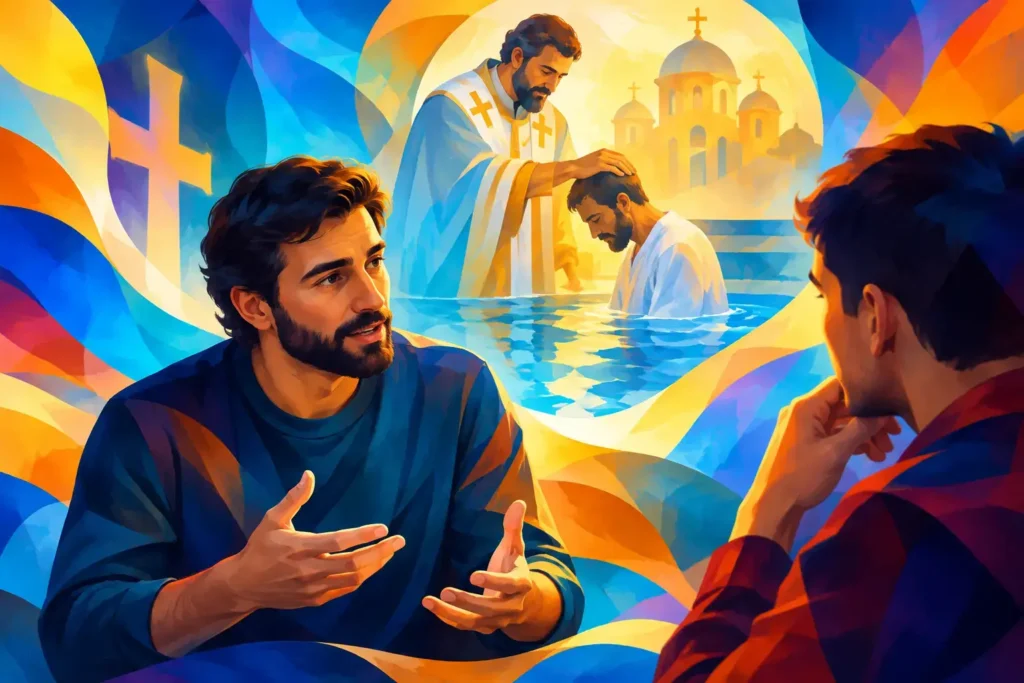
Conversion should not be rushed merely because someone feels enthusiastic. Enthusiasm is a gift, but it is not yet stability. A faithful process includes worship, instruction, prayer, pastoral conversation, and practical preparation for baptism or chrismation. It also includes a clear understanding that entry into the Church is the beginning of discipleship, not the graduation ceremony.
The Appeal of Moral Clarity Has a Cost
Many people are coming to Orthodoxy because they recognize that modern culture often treats moral conviction as cruelty. They want a church that speaks plainly about the holiness of life, the meaning of the body, marriage, sexual chastity, the dignity of children, and the call to repentance.
The Church does speak plainly. Yet moral clarity is not permission to become harsh, self-righteous, or preoccupied with other people’s sins. Orthodox repentance begins with the prayer, “Lord Jesus Christ, Son of God, have mercy on me, a sinner.” The Church calls sin what it is because Christ heals what sin has wounded.
This is one of the central trade-offs a seeker must understand. Orthodoxy will not remake its teaching to fit the spirit of the age. Neither will it offer a cold system of rules detached from mercy. The same Church that calls Christians to fasting also feeds the hungry. The same Church that teaches chastity receives the repentant. The same Church that confesses truth at the altar calls every member to humility.
Those who seek Orthodoxy only for a culture-war refuge may be disappointed. The Church is not a political tribe with incense. She is the Body of Christ, and she asks more of us than agreement with the right opinions.
Digital Discovery Must Lead to Parish Life
Online resources have helped many people encounter Orthodoxy for the first time. A Bible lesson, a recorded homily, or a live-streamed service can open a door for someone in a place with few Orthodox churches nearby. For families across the west side of the Phoenix metro area, digital teaching can make it possible to begin learning before they ever cross a parish threshold.
That access is a real blessing. Still, a screen cannot baptize, hear a confession, bless a marriage, or teach a child to stand reverently among the faithful. It cannot replace the slow work of belonging: arriving for services, learning names, sharing meals, receiving correction, serving others, and remaining present when parish life feels inconvenient.
The healthiest pattern is simple. Use online material to learn and prepare, then bring your questions into the worshiping community. A parish should welcome the person who knows almost nothing, but it should also invite him or her beyond observation. Come and see. Then come again. Pray with the Church before trying to explain the Church.
Families Are Seeking a Faith Their Children Can Inherit
Another feature of Orthodox conversion in 2026 is the concern many parents feel about spiritual inheritance. They do not want their children to receive a vague religious sentiment that disappears as soon as it meets pressure from school, peers, or the wider culture. They want a faith with memory, practices, boundaries, beauty, and saints.
Orthodox family life is not effortless, and parents should resist romantic fantasies about it. Young children may struggle through long services. Teenagers may ask hard questions. Fasting seasons require discernment, especially with health needs and family circumstances. But the Church offers more than a weekly lesson. It gives a household calendar shaped by feasts and fasts, prayer at home, Scripture, acts of mercy, and the steady presence of grandparents, godparents, and fellow believers.
Children do not need parents who perform perfection. They need parents who repent, pray, worship, and return when they fail. A parish that takes formation seriously helps families build that kind of durable life.
Post-Baptism Matters as Much as Preparation
Some conversion stories focus intensely on the moment of baptism or chrismation. That day is holy and unforgettable. But the Church has always understood that the newly illumined need continued instruction in the mysteries they have received. This ongoing formation is often called mystagogy.
Without it, a new Orthodox Christian can quickly become overwhelmed. There are prayers to learn, feast days to understand, habits to establish, spiritual temptations to recognize, and old patterns of thought to surrender. New converts may also discover that parish life contains ordinary human weaknesses. This should not surprise them. The Church is holy because Christ is holy, not because every parishioner is already perfected.
At All Saints of North America Orthodox Church, the pathway into the Church is designed to continue beyond the day of reception. That commitment reflects a basic pastoral truth: people do not need merely an entrance process. They need to be formed into a life of worship, repentance, and faithful endurance.
A Better Question Than “Should I Convert?”
For someone exploring Orthodoxy, the first question is not, “Will this fit my preferences?” A more honest question is, “Is this the Church of Jesus Christ, and am I willing to be changed by Him?”
That question should be approached without panic and without delay. Attend the services. Speak with a priest. Learn the Creed. Read the Gospels carefully. Bring your objections into the light rather than hiding them. Do not pretend certainty you do not yet possess, but do not demand that the Church reshape herself around your uncertainty either.
The conversion trends of 2026 may describe a growing interest in Orthodoxy. But every genuine conversion remains personal: a human being hears Christ’s call, repents, enters His Church, and begins the patient work of becoming holy. If that call has reached you, take the next faithful step. Welcome home.