A visitor may see an Orthodox Christian kiss an icon, light a candle before a saint, or ask the Theotokos to pray for him and wonder: why Orthodox venerate saints? The honest answer begins with a distinction many modern Christians have never been taught. Orthodox Christians worship God alone. We honor the saints because Christ has glorified them, and because death does not sever the Church from those who belong to Him.
This is not a side practice added to the Gospel. It flows from what the Church confesses every time she proclaims Christ’s resurrection: Jesus Christ has trampled down death. If death cannot separate us from the love of God in Christ, it cannot turn faithful Christians who have died into absent or unconcerned strangers.
Worship Belongs to God Alone
The Orthodox Church gives adoration, sacrifice, and worship to the Holy Trinity alone: Father, Son, and Holy Spirit. No saint is a god. No saint created the world, forgives sins by his own power, or saves humanity. Every saint is a creature redeemed by the mercy of God.
This matters because the English word worship is often used too broadly in religious debate. In Scripture and in the historic language of the Church, worship means the service due to God alone. Orthodox Christians offer the Eucharist to God. We confess our sins to God. We baptize in the name of the Father, Son, and Holy Spirit. We place our hope for salvation in Christ alone.
Veneration is different. To venerate means to show honor. Scripture itself commands honor for parents, rulers, elders, and those who labor faithfully in the Lord. Honor does not erase the difference between Creator and creature. In fact, honoring God’s holy ones rightly directs our attention back to the God who made them holy.
When an Orthodox Christian bows before an icon of St. Nicholas or St. Mary of Egypt, he is not bowing before wood and paint as though the material object possessed divine power. He honors the person depicted and, ultimately, the grace of God at work in that person. The icon bears witness that the Gospel can truly transform a human life.
Why Orthodox Venerate Saints Who Have Died
The central question is not whether Christians should honor faithful believers. Most Christians readily honor the apostles, the martyrs, and exemplary pastors. The deeper question is whether those believers are alive in Christ now.
Jesus answered that question plainly when speaking of Abraham, Isaac, and Jacob: God is not the God of the dead, but of the living. The saints are not trapped in a distant past. They stand before the throne of God, alive by the power of the risen Christ.
The Book of Revelation shows the saints in heaven offering the prayers of God’s people before God. Hebrews speaks of Christians running their race surrounded by a great cloud of witnesses. These passages do not portray heaven as a place of unconscious isolation. They reveal a worshiping, interceding communion centered on God.
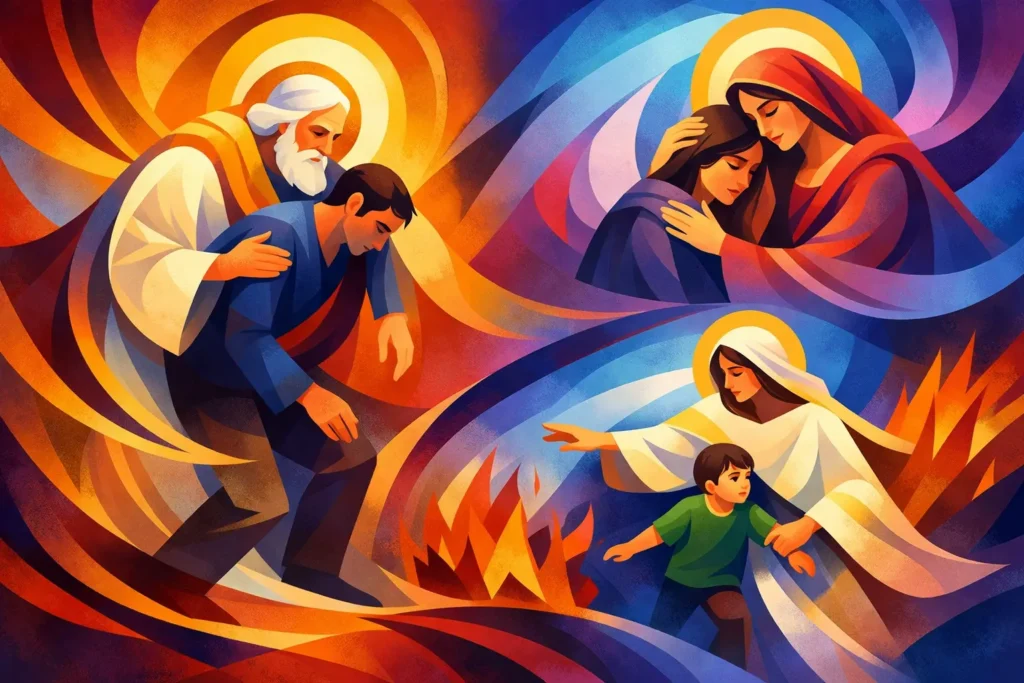
For this reason, Orthodox Christians ask the saints for their prayers in the same basic way that we ask a faithful friend, priest, spouse, or fellow parishioner to pray for us. We are not asking a saint to replace Christ. We are asking someone united to Christ to pray to Him.
Of course, there is a difference. We can speak audibly with the Christian standing beside us, while the saints are in heaven. Yet God is not limited by distance, bodily absence, or death. If He receives the prayers of His people on earth, He can also make known our petitions to His saints in heaven. The issue is not what unaided human beings can do. The issue is what the living God does within His one Church.
The Saints Do Not Compete With Christ
Many sincere Christians fear that asking saints for prayer or to venerate them diminishes the unique mediation of Jesus Christ. Orthodox Christians share the conviction that Christ is the one Mediator between God and man. Only the incarnate Son reconciles humanity to the Father. Only His Cross destroys sin and death. Only His Resurrection opens paradise.
But Christ’s unique mediation does not prohibit Christians from praying for one another. St. Paul repeatedly asks the churches to pray for him. When you ask another Christian to pray for your sick child, you are not denying Christ’s mediation. You are trusting that Christ joins His members together in love and allows them to bear one another’s burdens.
The intercession of the saints works in the same way, though in a fuller setting. The saints do not stand outside Christ as alternate mediators. They pray in Him, through Him, and because of Him. Their holiness is not independent achievement. It is the fruit of communion with the Savior.
The Theotokos, the Virgin Mary, holds a unique place among the saints because she freely received the Word of God in her womb and gave birth to Jesus Christ, God the Word made flesh. Orthodox Christians call her blessed because Scripture does. We honor her not as a fourth member of the Trinity, but as the mother of our Lord and the supreme example of a human person saying yes to God.
Icons Teach the Meaning of the Incarnation
The veneration of icons often raises the same concern as the veneration of saints: does this violate the commandment against idols? The Church answers by taking that commandment seriously. An idol is a false god, an object treated as divine, or a created thing set against the living God.
An icon is not an idol. It is an image that confesses the Incarnation. The invisible God took visible flesh in Jesus Christ. The Son of God could be seen, touched, heard, and portrayed because He truly became man without ceasing to be God.
That is why Orthodox Christians do not make images of the divine essence. We depict Christ in His incarnate humanity, and we depict the saints as men and women renewed by His grace. Icons are not decorations meant to create a religious mood. They are visual theology. They announce that matter can become a vessel of God’s grace because the Word became flesh.
Kissing an icon is therefore a physical act of reverence, much like kissing a Bible, a cross, or the hand of a beloved parent. The honor passes to the person represented. It does not stop at paint, wood, or metal.
Saints Show What a Transformed Life Looks Like
The saints are not spiritual celebrities. The Church does not remember them because they were impressive personalities or because they lived trouble-free lives. Many were obscure, poor, wounded, persecuted, or misunderstood. Some had grave sins before repentance. Their stories are preserved because the mercy of God made them radiant.
A saint tells the truth about Christian life. Holiness is not vague niceness, private inspiration, or religious achievement. It is union with Christ expressed through repentance, prayer, courage, chastity, generosity, endurance, and love of enemies.
Different saints also meet us at different places in life. A martyr teaches courage when faith carries a cost. A repentant sinner teaches that no one is beyond God’s mercy. A holy mother or father teaches that ordinary family life can become an offering to God. A desert ascetic exposes the restless habits we excuse and calls us back to prayer.
Still, Orthodox Christians do not treat saints as lucky charms or use them to avoid repentance. Asking St. George, St. Nektarios, or the Theotokos to pray for us does not excuse us from forgiving our neighbor, going to confession, fasting, or obeying Christ. True veneration makes demands on us. If we honor the saints, we must be willing to imitate their faith.
A Family Larger Than Death
Modern life trains people to imagine faith as an individual relationship with God, managed privately and judged by personal preference. Orthodox Christianity gives a larger and more demanding vision. To be baptized into Christ is to be received into His Body, a family that includes believers on earth and the saints in heaven.
We do not need to choose between loving Jesus and honoring His friends. The more clearly we see what Christ has done in the saints, the more we glorify Him. Their lives are not detours from the Gospel. They are evidence that the Gospel is true.
If this teaching feels unfamiliar, do not settle for a caricature of it. Come to the services, listen to the prayers, and see how often the Church returns to Jesus Christ as Lord, Savior, Judge, and Giver of life. For those in the west Phoenix area who are seeking a serious path into historic Christianity, All Saints of North America Orthodox Church welcomes honest questions and the patient work of learning to pray with the whole Church.