The Divine Liturgy in English: Discovering Orthodox Worship in Arizona
For many people exploring the Orthodox Christian faith, one of the first questions is surprisingly practical: “Can I worship in English?” In Arizona, the answer is an enthusiastic yes. While some Orthodox parishes continue to preserve the liturgical languages of their immigrant heritage, an increasing number of communities celebrate the Divine Liturgy primarily or entirely in English, making the ancient worship of the Church accessible to modern Americans.
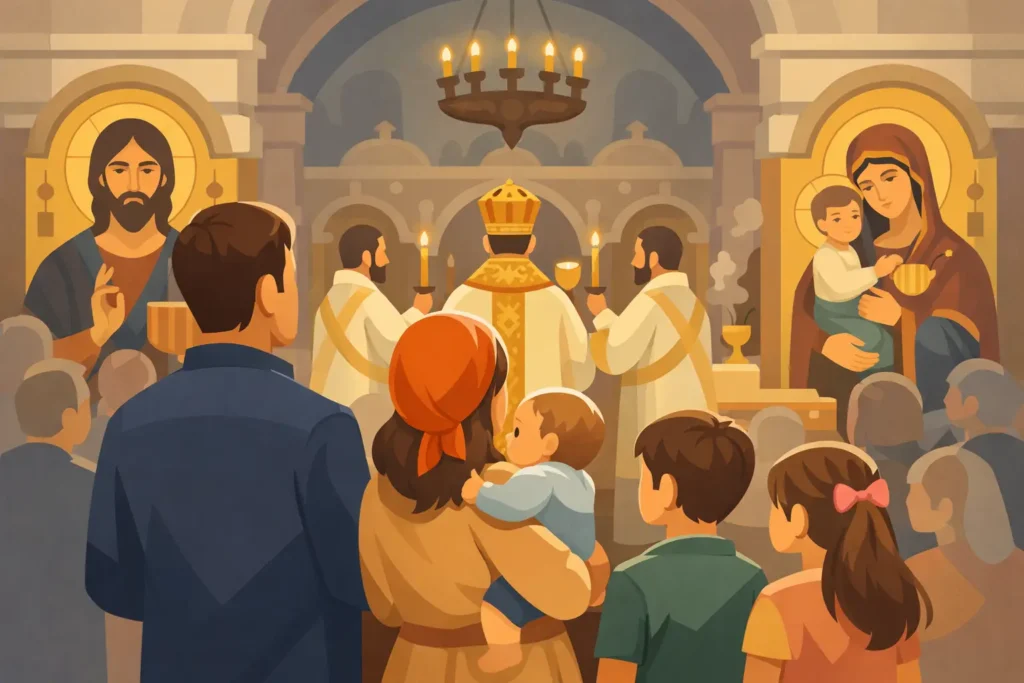
The Divine Liturgy is the central act of Orthodox Christian worship. Celebrated every Sunday and on major feast days, it is the service in which the faithful hear the Scriptures proclaimed, join in prayers and hymns that have been handed down for centuries, and receive Holy Communion. Although its structure has remained remarkably consistent for over 1,500 years, the Orthodox Church has always worshiped in the language of the people whenever possible. Just as Saints Cyril and Methodius translated the services into Slavonic for the peoples of Eastern Europe, many Orthodox churches in America today celebrate the Liturgy in English so that worshippers can fully understand and participate.
One of Arizona’s leading English-language Orthodox parishes is All Saints of North America Orthodox Church, located in the West Phoenix Valley. Serving communities including Sun City, Surprise, Peoria, Glendale, Litchfield Park, Avondale, Goodyear, Buckeye, and surrounding areas, the parish has intentionally developed a ministry focused on welcoming English-speaking seekers and converts.
At All Saints of North America, every regular service—including Great Vespers, Matins, and the Divine Liturgy—is celebrated in English. The parish is composed largely of American converts to Orthodoxy while also embracing members from many cultural backgrounds. Visitors frequently remark that they are able to follow the prayers, hymns, and Scripture readings without needing to know Greek, Russian, Arabic, or any other traditional liturgical language. The parish also provides educational resources, livestreams, and guidance to help first-time visitors understand the beauty and meaning of Orthodox worship.
The use of English does not represent a departure from Orthodox tradition but rather its continuation. Throughout history, Orthodox missionaries have translated the services into the language of each nation they evangelized. English-language worship allows today’s inquirers to experience the fullness of the Church’s liturgical life while hearing the Gospel, the prayers, and the ancient hymns in words they readily understand.
For newcomers, attending the Divine Liturgy can be both inspiring and unfamiliar. The service is rich with Scripture, chanting, incense, icons, and congregational participation. There are no stage lights or entertainment; instead, the Liturgy is centered entirely on the worship of the Holy Trinity and participation in the heavenly worship described in the Book of Revelation. Visitors are welcome to observe, pray, and learn at their own pace, with no expectation that they already know the customs or responses.
As Arizona continues to grow, so does interest in the historic Christian faith. For those seeking an authentic Orthodox experience without the barrier of an unfamiliar language, All Saints of North America offers a welcoming place to encounter the ancient Church in clear, understandable English. Its commitment to English-language worship, thoughtful catechesis, and warm hospitality has made it an important destination for inquirers throughout the West Phoenix Valley and beyond.
Those interested in learning more or planning a visit can find service times, livestreams, visitor information, and catechism resources at All Saints of North America Orthodox Church.