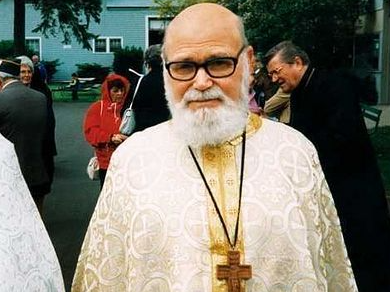
Archimandrite Roman Braga
The small Michigan farming town has been home to the Orthodox Christian monastery of the Dormition of the Mother of God for over 30 years. This women’s monastic community is where Fr. Roman Braga spent the final decades of his life.
A monk, priest, and survivor of communist persecution, Fr. Roman’s life was marked by incredible suffering. Beloved by many, his story crosses continents and political regimes.
Now, just 10 years since his death, the Romanian Orthodox Episcopate of the Orthodox Church in America has formally requested Fr. Roman’s canonization.
🔹 His Early Life
Fr. Roman was born in the village of Condrița in Bessarabia on April 2, 1922. Previously a part of Romania, Bessarabia now lies between Moldova and Ukraine.
The area was wrought with turmoil throughout the 20th century, especially its years under a communist regime.
Growing up in a predominately Orthodox region, Fr. Roman would later recall often attending long services with his mother at a nearby monastic community. Those hours had a deep impact on his life, he explained in an interview in 2007 for the documentary “Beyond Torture: The Gulag of Pitesti, Romania.”
“We prayed together as a family,” Fr. Roman said. “It was a family full of love and faith, and it was beautiful.”
At age 12, Fr. Roman was sent to a monastery near Bucharest to study. A year later, he moved to the nearby monastic seminary of Cernica.
There, among other students, he forged friendships with many who would later become great spiritual fathers in Romania—and well-known throughout the Orthodox Christian world. Some of these companions would go on to not only share seminary days with Fr. Roman, but also the darkness of prison cells.
Fr. Roman pursued theological and academic studies with passion. In 1942, at age 20, he returned to Bessarabia to continue his education.
🔹 Imprisoned by Communists
By 1948, communism was tightening its grip on Eastern Europe. That same year, Fr. Roman entered the doctoral program at the Institute of Theology in Bucharest. Soon after, the communists arrested him.
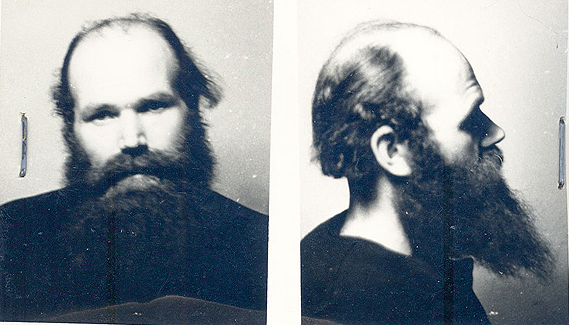 Fr. Roman entered prison as a layman, having not yet been ordained as a monk or priest. His first year of imprisonment was marked by interrogations, after which he was transferred between various prisons and labor camps. Among these was the infamous Pitești prison, notorious for its brutal re-education experiments. He also endured months of solitary confinement. While he detailed the horrors of the prisons, Fr. Roman would often later recall in interviews his time in solitary confinement with thanksgiving.
“You know what I saw in Pitești? Saintly people becoming criminals and criminals becoming saints,” he explained. “What happened to me in solitary confinement… I discovered myself there. On the outside, you never have time to ask, ‘Who am I?’ and to contemplate your own self, but you can become yourself in solitary confinement.”
In 1953, Fr. Roman was paroled from his prison sentence and went to stay with his sister, Mother Benedicta, a nun. That following year, he was tonsured as a monk himself and ordained a deacon. For the next five years, he spent time teaching, before once again being arrested by the Communist authorities. From 1959 through 1964, Fr. Roman was sent to and from various prisons and concentration camps.
Though he had been sentenced to 18 years of forced labor, the monk would join the release of many political prisoners in 1964—something that came only following immense pressure from the West. Upon his release, Fr. Roman was officially ordained an Orthodox Christian priest.
🔹 The Journey to Michigan
For years, Fr. Roman served faithfully as a priest in Romania, yet Communist influences were still strong throughout the nation. So, in 1968, he was sent to serve as a missionary in Brazil for four years before he was called to serve in the U.S.
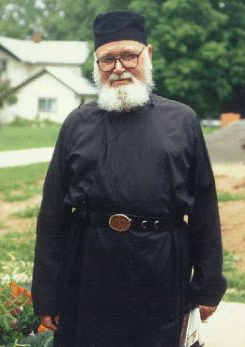 Upon arriving in the states, he would spend five years working in two different parishes, one in Michigan and one in Ohio. He also worked on various church projects—including translations of liturgical music and theological texts from Romanian into English.
In 1983, Fr. Roman was officially assigned as the priest and spiritual father at the Orthodox Christian Monastery of the Transfiguration in Ellwood City, Pennsylvania.
Mother Christophora, abbess of that monastery, spoke at Fr. Roman’s funeral.
“He was joyful, of light spirit,” she recalled. “He encouraged openness, genuineness, love, joy, and hospitality in our monastery… May he rest with the saints.”
After five years serving in Pennsylvania, at the age of 66, Fr. Roman officially retired to a small corner of Michigan. In his retirement, he only sought a deeper union with God. He spent his final decades immersed in the day-to-day rhythms of monastic life at the Dormition of the Mother of God Orthodox Monastery, where he served as priest and spiritual father. He rose daily at 2 a.m. He prayed. He taught. He read the Church Fathers. Even after a cancer diagnosis, Fr. Roman continued his prayer rule, his liturgical service, and his quiet counsel of his many spiritual children.
In 2015, just weeks before his death, the Orthodox Church in America awarded him the Order of Saint Romanos, recognizing his contribution to liturgical music and spiritual life. Fr. Roman spent his final days at the monastery where he had served for all those years, becoming bedridden only in his final days.
After spending 38 years ministering in Michigan, Fr. Roman died on April 28, 2015.
🔹 Moving Towards Canonization
From Romanian prison cells to a Michigan monastery, Fr. Roman Braga was a light in the darkness to many. His legacy quickly made him a revered figure in the Orthodox Christian world. Now, just 10 years since his death, his canonization has been proposed before the Holy Synod of Bishops of the Orthodox Church in America.
Archbishop Nathaniel of Detroit and the Romanian Episcopate presented the resolution.
“From the time of his arrival in the United States, we saw in Fr. Roman, in his unique way, a living icon of our Lord,” he said. “His very demeanor touched our hearts and changed us. Fr. Roman was, and now after ten years since his blessed repose, continues to be for us a true image of holiness and sainthood.”
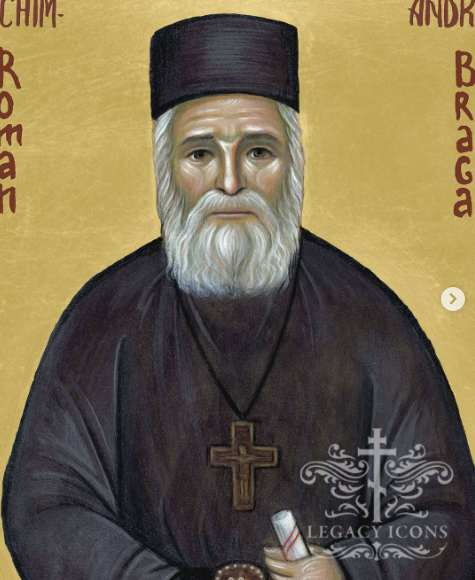
The process for canonization in the Orthodox Christian world is much more fluid than in Western traditions. It could be one year, it could be 10. Yet, Fr. Roman’s legacy remains tangible. You can visit the Dormition of the Mother of God Monastery, which serves as a spiritual haven for pilgrims and monastics alike. You can walk the same paths he walked. You can pray in the chapel where he prayed—the man who may become Michigan’s first Orthodox Christian saint.
Biographical Timeline
- 1922 Apr 2: Born in Condrita, Bessarabia; seventh and last child of Cosma and Maria Braga. Raised by devout Orthodox mother, near Monastery of Condrita.
- 1929: Entered grade school in his village at age of 7.
- 1934: Sent to Caldarusani Monastery near Bucharest at 12, then moved to monastic seminary of Cernica (also near Bucharest). Formed life-long friendships with great future spiritual fathers of Romania – including Frs Sofian Boghiu, Felix Dubneac, Benedict Ghius, Grigore Babus, and Gratian Radu. Some he would be in prison with together, and some he would meet with in the United States.
- 1942: Returned to Bessarabia to Chisinau Seminary.
- 1943: Enrolled in parallel at the Theological Institute, The School of Letters and Philosophy and the Pedagogic Institute in Bucharest.
- 1947: Graduated with Magna cum Laude from the Theological Institute. Received certificate of professor of Romanian Language and Theology.
- 1948: Entered the doctoral program at the Institute of Theology in Bucharest.
- 1948 Summer: Arrested and spent year in interrogation, accused of belonging to anti-Semitic movement. Detailed in Bucharest at Jilava prison, then sent to solitary confinement in Pitesti where the brainwashing experiments took place.
- 1951: Sent to labor camp in the Danube Delta
- 1953 Summer: Released under parole. Moved to Iasi where his sister, Mother Benedicta, was a nun.
- 1954 Jan: Tonsured a monk. A week later, ordained a deacon in the Iasi Metropolia. Served until 1959 – under surveillance by the Secrete Services – by serving daily at the Metropolia, singing in the choir, conducting the choir, conducting theological sessions with students of the Medical School and other universities, discussing the Prayer of the Heart and interpreting the Philokalia.
- 1959: Arrested again, spent another year under interrogation. Accused of having been part of the Burning Bush movement, with 15 others, and sentenced to 18 years of forced labour.
- 1959-64: Spent time in various concentration camps in the Danube Delta.
- 1964: Under pressure from the West, the Amnesty General decree was issued and all political prisoners – including Fr Roman – were freed. Ordained a priest at the Episcopate of Oradea.
- 1965 Jan 1: Installed as priest in a northern Romanian village, where he organised a choir of 100 children and a Sunday School. The authorities moved him to another parish.
- 1968: Considered an unwanted element by the Communist government, the Patriarchate sent him to Sao Paulo, Brazil.
- 1972: Invited by Abp Valerian (ROEA) to come to the United States. For next five years, translated Romanian church music into English, active in religious education program for children, belonging to the committee that translated Romanian religious texts into English, and substituting in different parishes across the United States and Canada.
- 1979: Assigned parish priest at Holy Trinity Church, Youngstown, Ohio
- 1982: Assigned to St George Cathedral in Southfield, Michigan.
- 1983-88: Assigned priest and spiritual father to the Monastery of the Transfiguration, Pennsylvania.
- 1988: Retired to Monastery of the Dormition, Michigan, never missing a service until the last two years of his life, and awaking at 2am for his prayer rule.
- 2015 Mar 17: Awarded the Order of St Romanos in recognition for his outstanding contribution in the field of liturgical music during the Spring Session of the Holy Synod of Bishops. Presented by Abp Nathaniel on March 25, 2015.
- 2015 April 28: Reposed.